
In the bottom half of the draw, all eyes were on reigning Olympic champion Hidayat Heydarov (AZE) who, from the outset, appeared to be performing below his usual standards. He was pushed into a long golden score contest in the round of 16 against Victor Skerlev (BUL), eventually securing victory after nearly ten minutes of intense effort.
In the next round, however, Heydarov was unable to overcome local judoka Giorgi Loladze (GEO), who seemed on course for a place in the final. That was without banking on Finland’s Valtteri Olin, an outsider who disrupted expectations and earned his place in the final with a remarkable run.
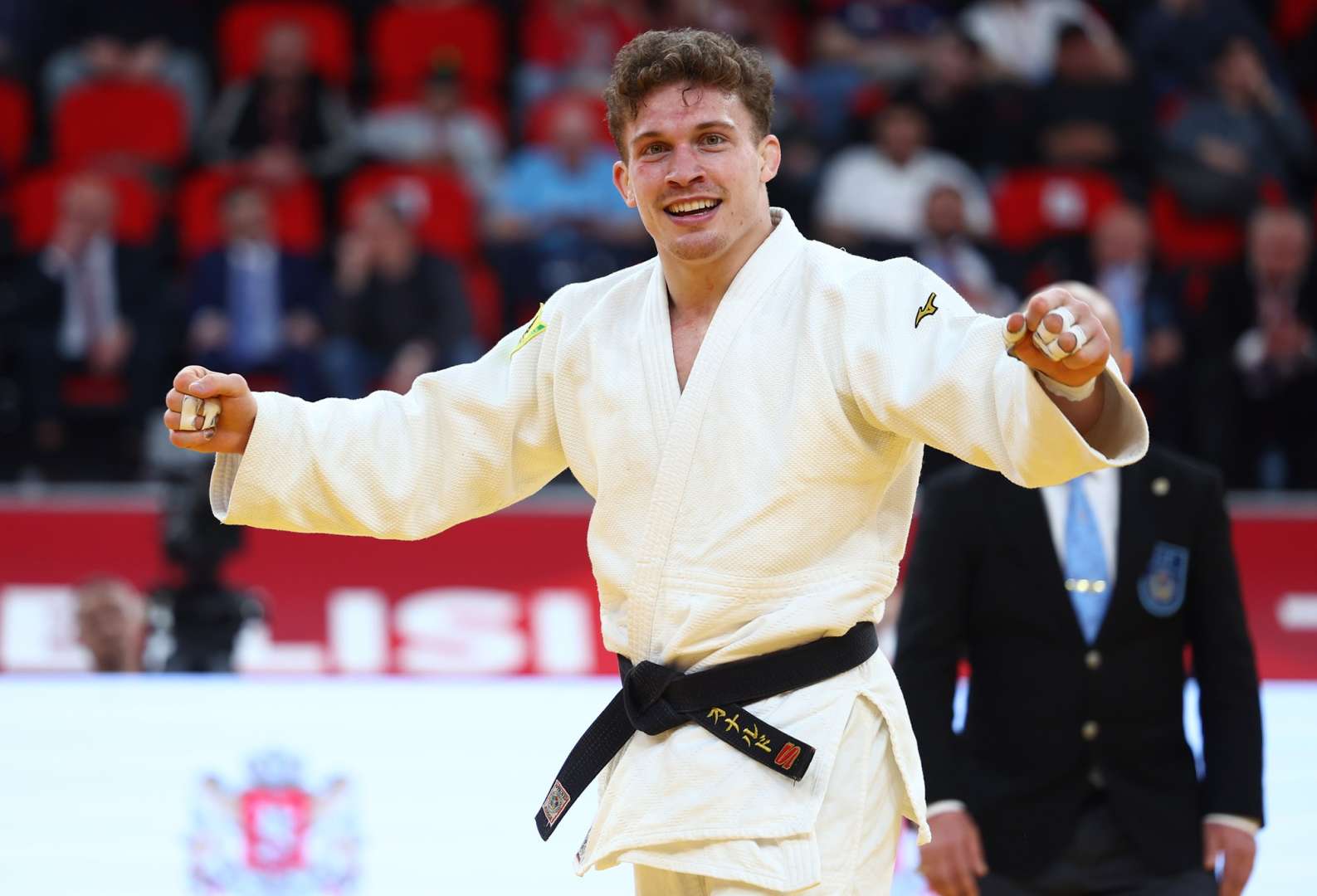
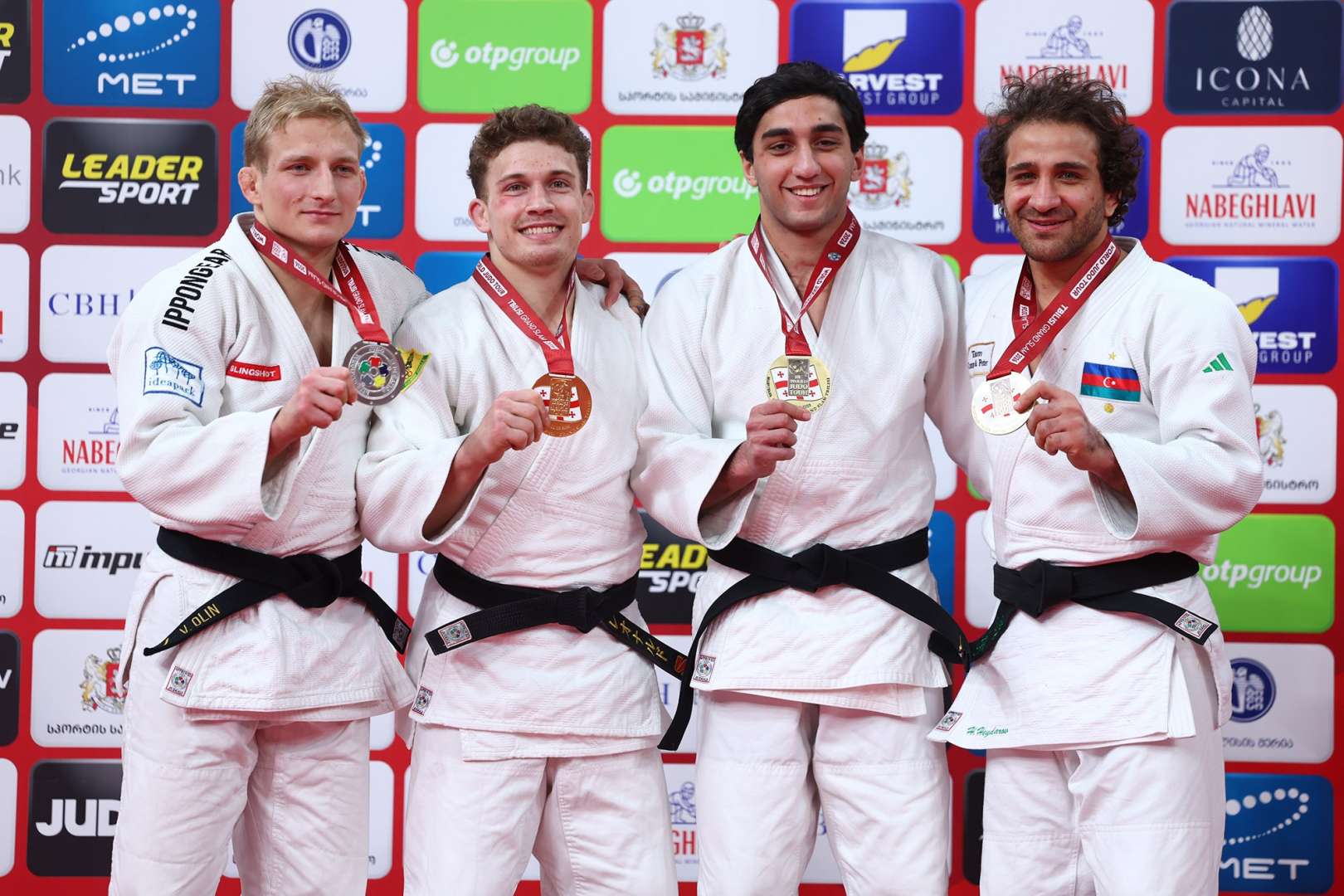
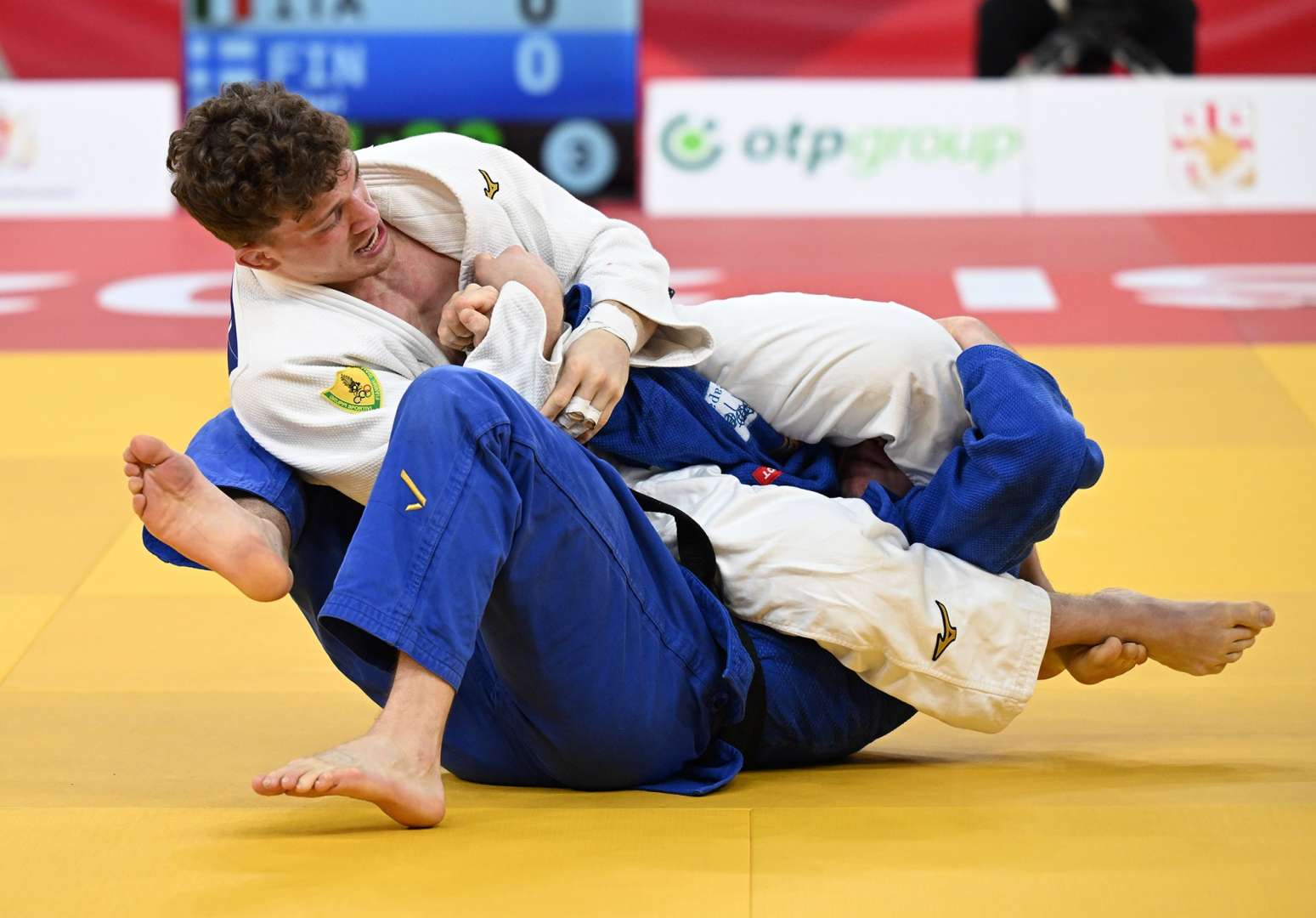
The final therefore featured Leonardo Valeriani (ITA) and Valtteri Olin (FIN). The contest remained balanced for much of the time, until a transition to groundwork changed everything. Valeriani demonstrated precision and control, freeing the arm into a juji-gatame attempt, transitioning into an immobilisation and then returning to the arm to force the submission. It was a sequence executed with clarity and efficiency; the gold medal was for Valeriani.
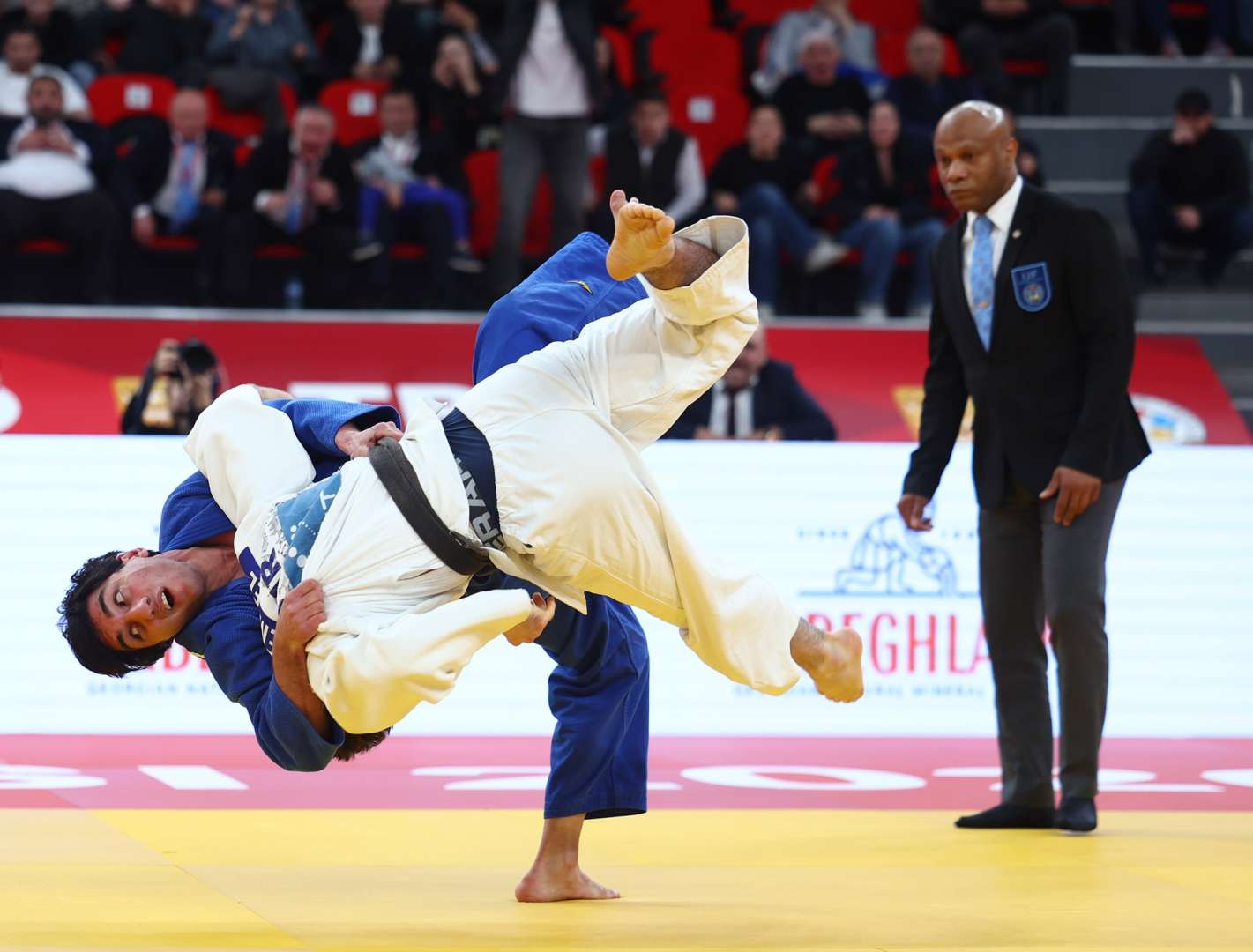
Muhammad Demirel (TUR) and Giorgi Loladze (GEO) met in the first bronze medal contest. The atmosphere intensified immediately. Despite Demirel scoring first, the crowd rallied behind the Georgian. One should never underestimate a Georgian judoka driven by pride. Fuelled by the support, Loladze launched a powerful lifting technique in the purest Georgian style to score ippon and completely turn the contest around. This bronze medal was for Loladze and for Georgia.
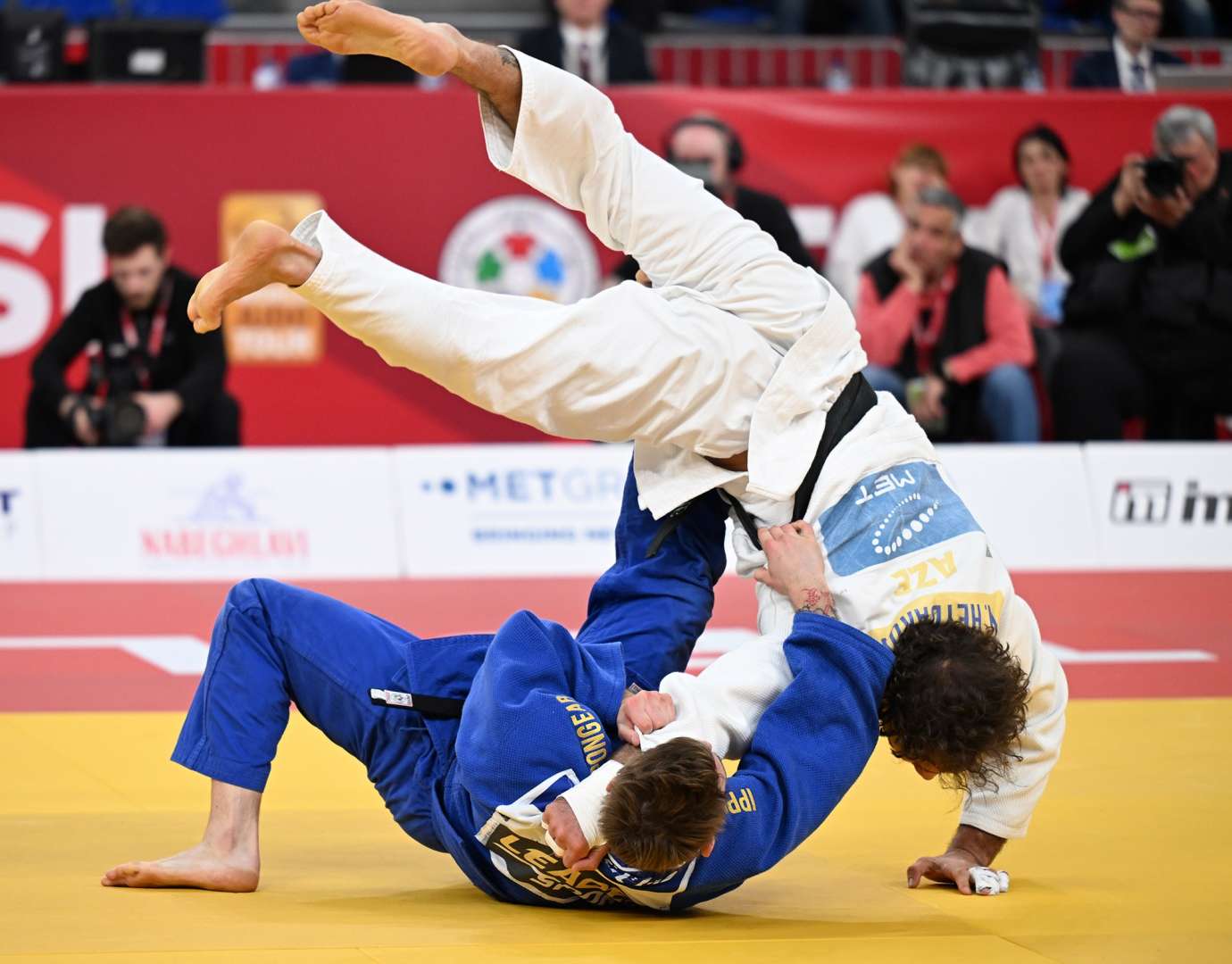
Hidayat Heydarov (AZE) faced Anton Shuhalieiev (ESP) in the second bronze medal contest. Once again, the outcome was decided after a hard-fought battle. Heydarov managed to secure the bronze medal, though at the cost of considerable physical effort. It was not his most fluid performance but he still reached the podium, demonstrating that even on a difficult day, he remains a champion. If nothing else, he accumulated valuable mat-time, which will serve him well in the future.
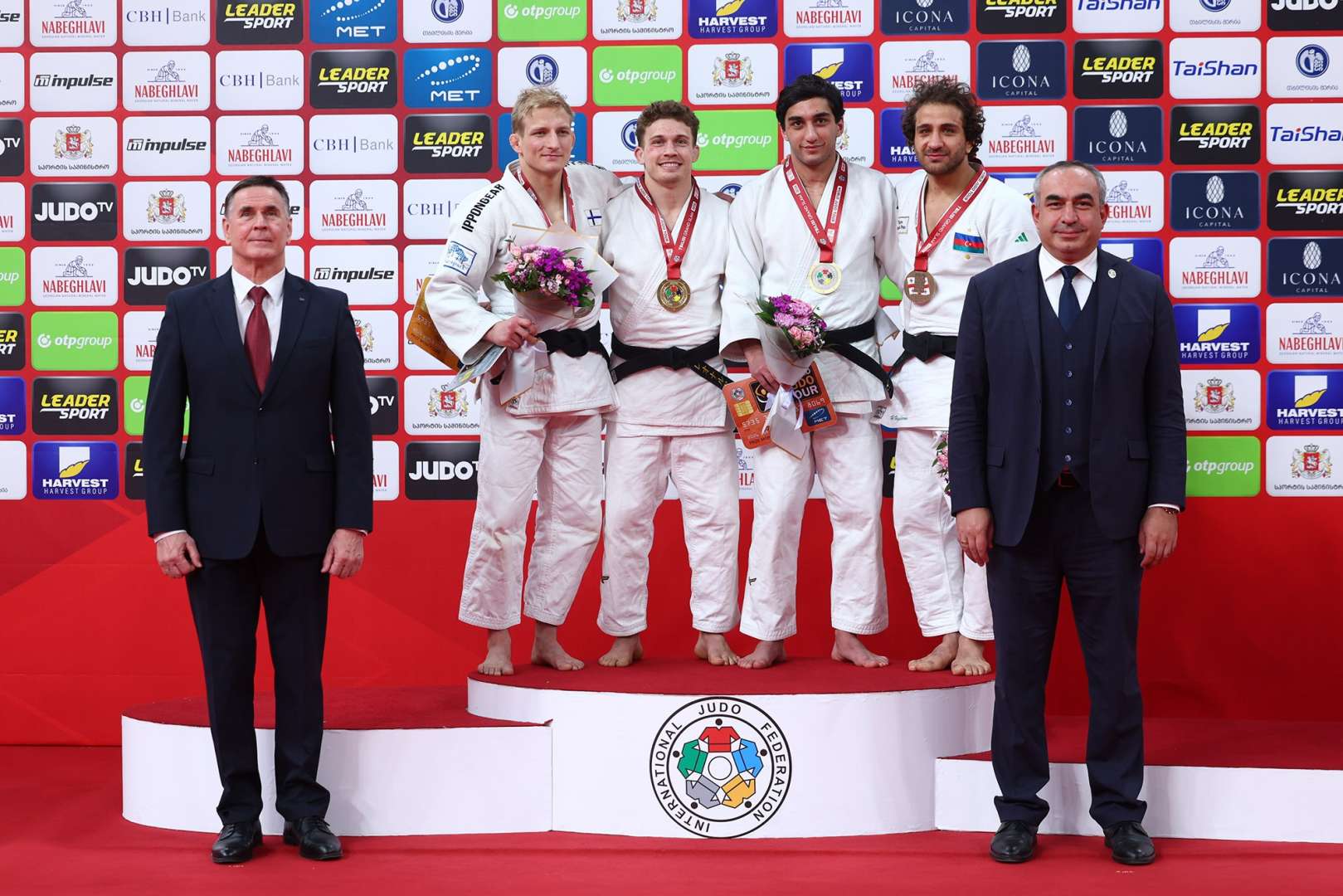
Final (-73 kg)
Bronze Medal Fights (-73 kg)