
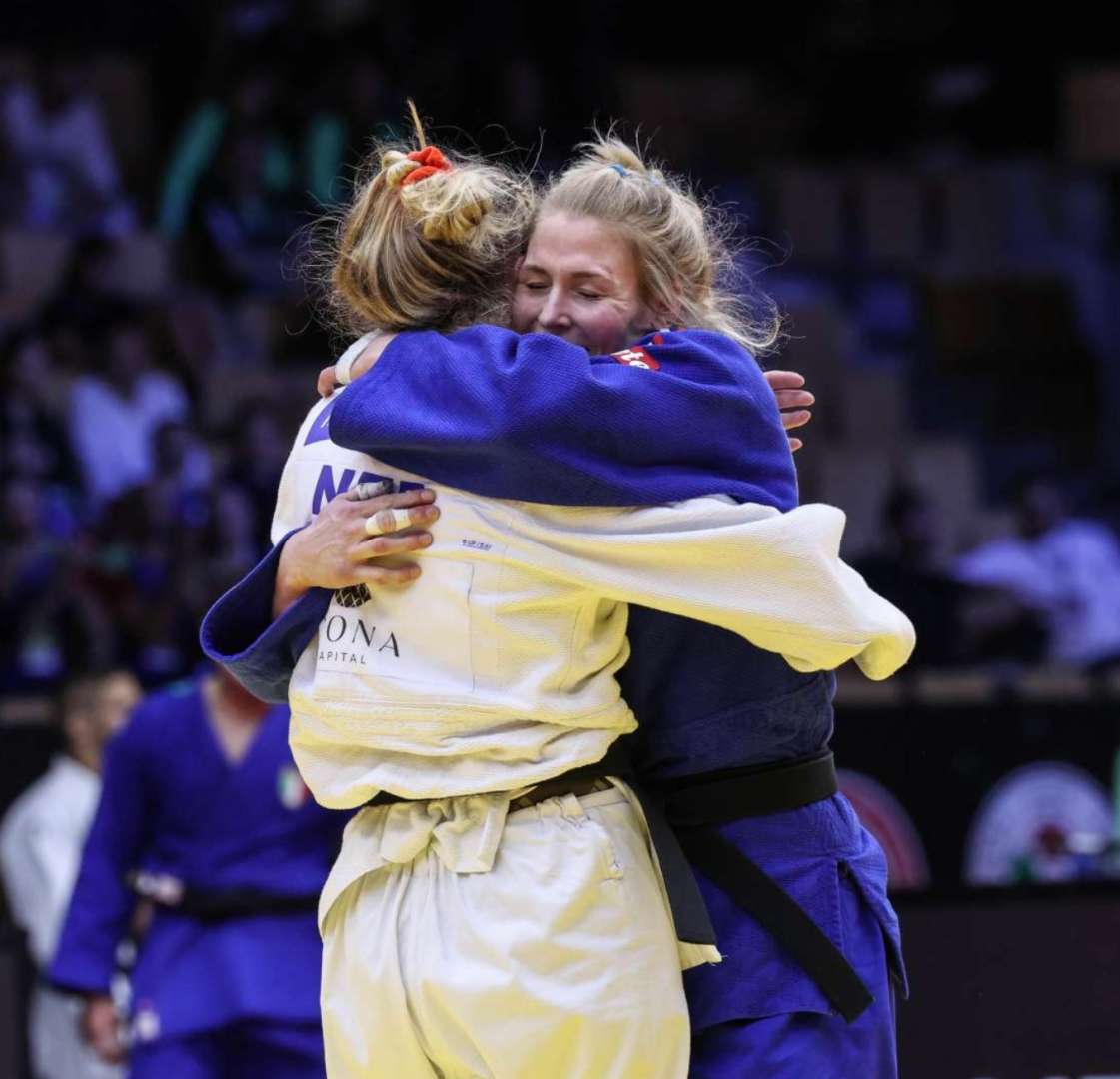
Having married Andrea Regis on 24th February 2024 and retiring from competition in 2025, Polling is now chair of the IJF Athletes’ Commission. A mother of two daughters, she has begun a new chapter of her judo life, one centred around listening to athletes and ensuring that their voices are heard.
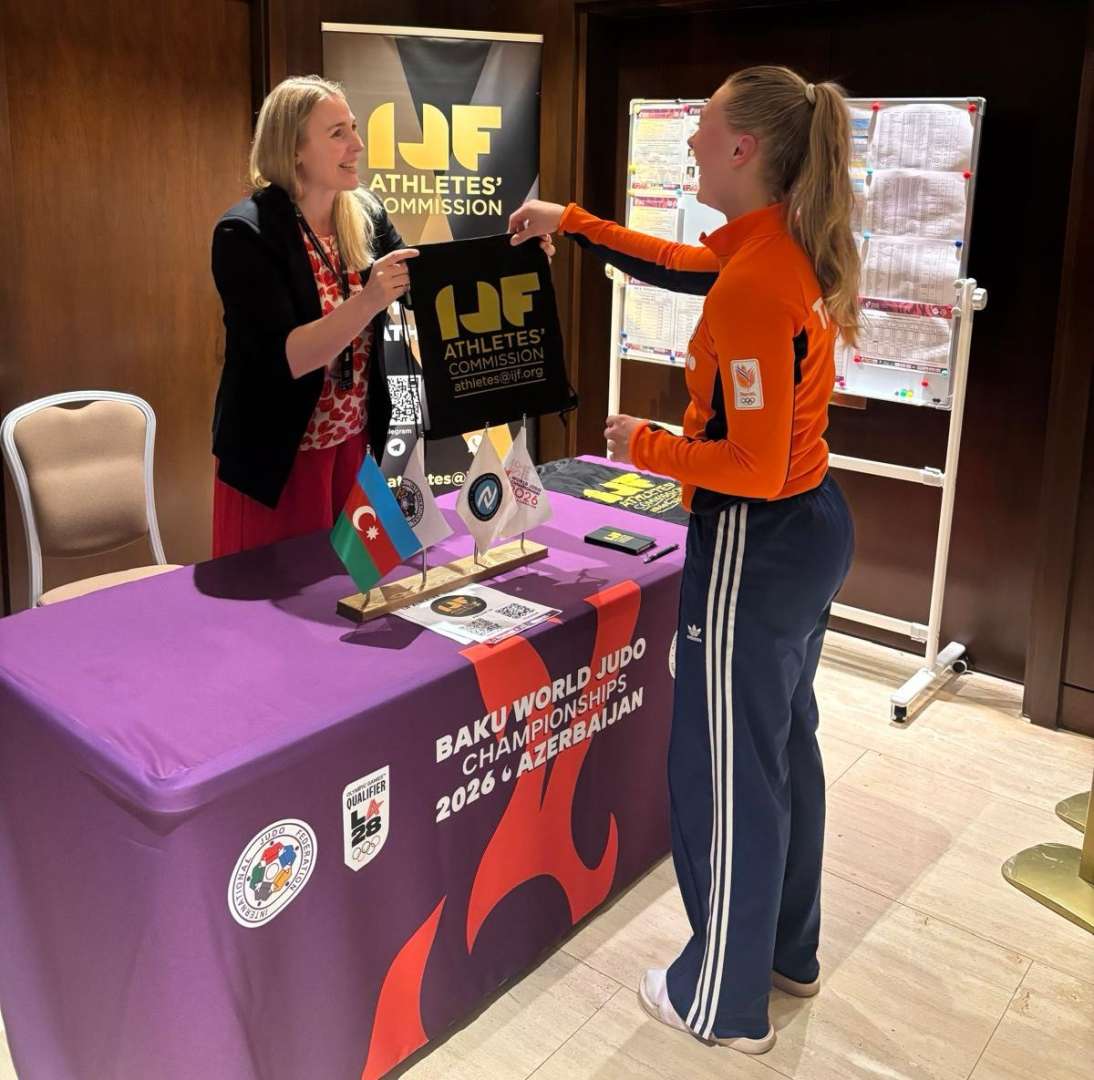
At the Baku World Championships, the Athletes’ Commission took an important step in that direction by organising its first dedicated booth, creating a direct and accessible point of contact for athletes. “The main idea behind having an Athletes’ Commission booth at the World Championships was to make the Commission more visible and accessible, and to create more direct contact with athletes,” she explained.
“There is still work to do when it comes to athletes knowing exactly what the Athletes’ Commission is and especially what we can do for them. This is something we want to address. We want athletes to know that they can approach us with questions, problems or ideas and, most importantly, that we can bring their input to the right people within the IJF.”
The booth also offered an opportunity to develop the Commission’s direct communication channels. A Telegram channel was launched in January and a WhatsApp channel followed last month. Neither is restricted to athletes alone. Coaches, team officials and anyone able to share relevant information is encouraged to join. “During the World Championships, we gained approximately 60 to 70 new followers. Across WhatsApp and Telegram, we are now approaching 800 members, which I think is already a great number. This direct communication is very important. We can share information, projects and opportunities but they only have value if athletes actually know they exist.”
An anonymous feedback form was another practical element of the initiative, allowing athletes to submit ideas, concerns and questions. One proposal particularly caught Polling’s attention: an IJF Youth Athlete Development and Mentorship Programme, connecting young judoka with experienced international athletes. “I think this could be a very interesting idea to explore further,” she said.
For the chair of the IJF Athletes’ Commission, the first booth was a clear success. Approval has already been given to repeat the initiative at the next world championships, with the aim of keeping it open throughout the competition. This will give athletes from every weight category an equal opportunity to visit, ask questions, share ideas and become more familiar with the Commission.
Among the issues raised most frequently are those around refereeing and the rules. This is a subject on which the Athletes’ Commission has already been working with the IJF Refereeing Commission since last year. “President Vizer also expressed a wish to organise refereeing seminars specifically for athletes in connection with training camps. The first seminar of this kind on the IJF World Judo Tour was organised in Peru this year. We are now discussing how we can continue and further develop this next year.”
For Kim Polling, this illustrates exactly how the Commission should operate: speaking directly with athletes and coaches, listening to their experiences, then working with the relevant IJF commission to identify practical improvements.
Mental health is another key area. With Veronika Jakl working as an IJF Mental Health Officer since last year, the Athletes’ Commission is involved closely in the development of better support and resources. Kim Polling has also discussed the subject with the IOC, considering what is already available and where further progress can be made. “President Vizer identified mental health as an important subject for athletes. One of the things I would really like us to achieve is a partnership with an organisation specialising in mental health, so that we can offer even better support to our athletes.”
Not every matter raised is of such scale. Sometimes, the most useful work begins with a very practical issue. Earlier this year, athletes reported problems with the adhesive used for sponsor stickers on judogi backnumbers. The stickers had become difficult to remove and left residue behind. The Athletes’ Commission contacted the Sport Commission, which immediately involved the supplier. After testing, a professional adhesive remover was identified, tested specifically on judo backnumbers and found to remove residue without marking, discolouring or damaging the surface. “It may sound like a small example but for me it shows perfectly what we want the Athletes’ Commission to be: an athlete raises a problem, we bring it to the right people and together we try to find a solution.”
The Commission now has its own budget, enabling ideas to become concrete projects. The booth in Baku is one example of what this can achieve. Kim Polling is grateful for the backing received from IJF President Marius Vizer, IJF Secretary General Dr Lisa Allan and the different IJF commissions. Having entered this side of the judo world recently, she has discovered a community willing to listen and act. “You often hear that judo is a family,” she concluded, “and I am now discovering that this is also true on the other side of the tatami.”