
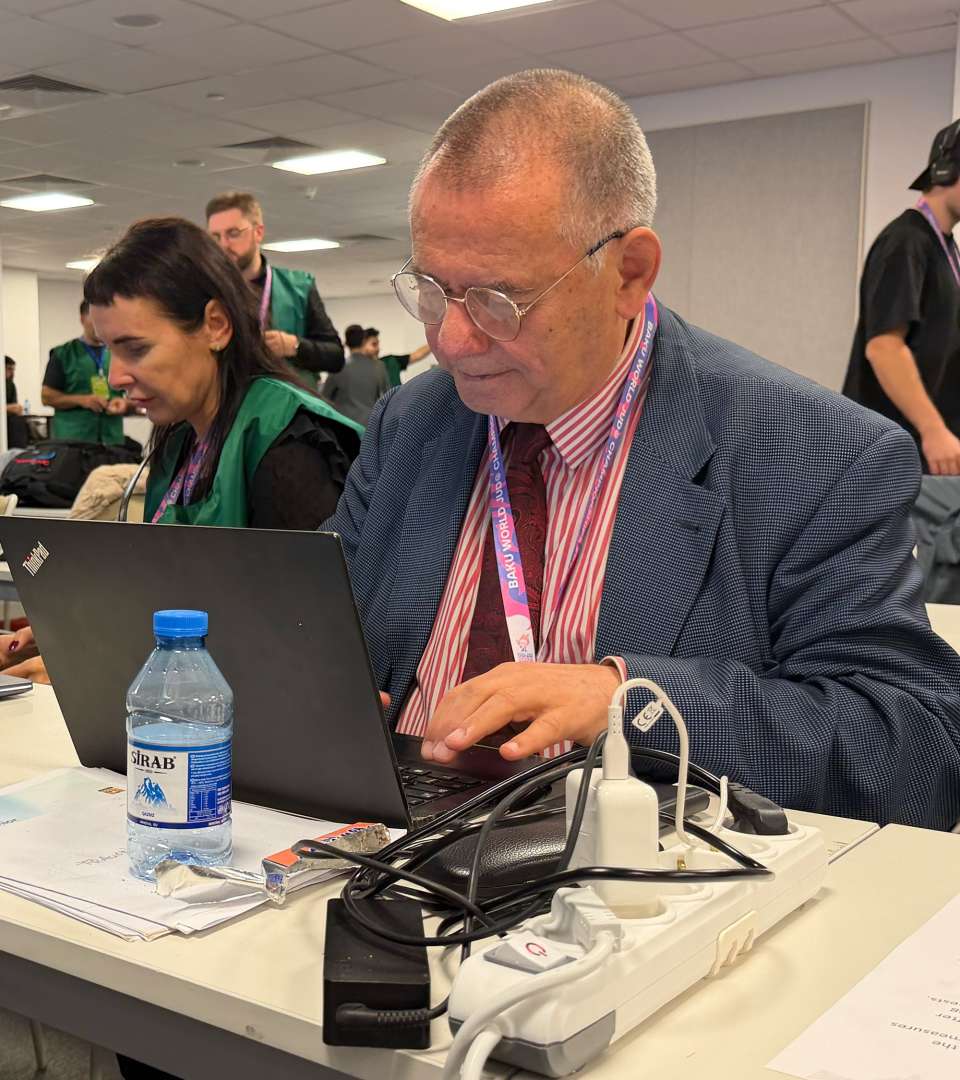
With such a life in the sport, there are far too many stories for one interview, let alone a few paragraphs. Yet, from his years spent moving through the backstage corridors of major international events, certain names and memories stand out. Together, they form a living chronicle of judo.
“In 1975, the world championships took place in Vienna, in my own country,” he recalls. “There would be so much to say about that event but I particularly remember, for example, the fantastic victory of Jean-Luc Rougé, the very first French world champion. It was an unforgettable moment. Later, I was also present at the first women’s world championships in New York, in the United States. Austria finished at the top of the table with three gold medals; it was incredible. In 1984, the women’s world championships came to Vienna and I was the press chief. My last world championships as a journalist though will be Lausanne 2028. After that, I can retire.”
Retire? Perhaps officially. Yet Jo will always remain, above all else, a judo enthusiast. “Judo attracted me very quickly. Maybe because it was exotic, maybe because at that time the media only spoke about football and, in Austria, skiing. I wanted to do something different. Of course I wanted to be a journalist but not like everyone else. I began my professional career in 1973. In 1974, I decided to go to Budapest for the Hungarian Cup. Nobody knew I was coming. When I arrived, people were surprised to see an Austrian journalist there to cover the event. I immediately loved judo, so much so that in 1976 I stepped on to the tatami myself. Today, I am a second dan.”
Jo’s pantheon of judoka is immense. “There are so many champions who made an impression on me and whom I will always remember. Perhaps the episode that left the strongest memory was the victory of Shōzō Fujii of Japan against Bernard Tchoullouyan of France in the Stade de Coubertin in Paris. The contest was epic and, at the end, the entire crowd stood for a standing ovation. On the podium, Fujii knelt down, kissed the podium and began to cry." Jo still gets goosebumps when he thinks about it.
Everyone remembers the great names, the world and Olympic champions. Jo also remembers the others though, and that is where the depth of his knowledge and, even more, his love for judo become clear. “I remember the Russian Vitaly Pesnyak. He was a European champion and a world medallist. He never won the ultimate world or Olympic title but in my opinion he was one of the strongest judoka in his category. Sometimes, you also need a little luck to win gold on the day.
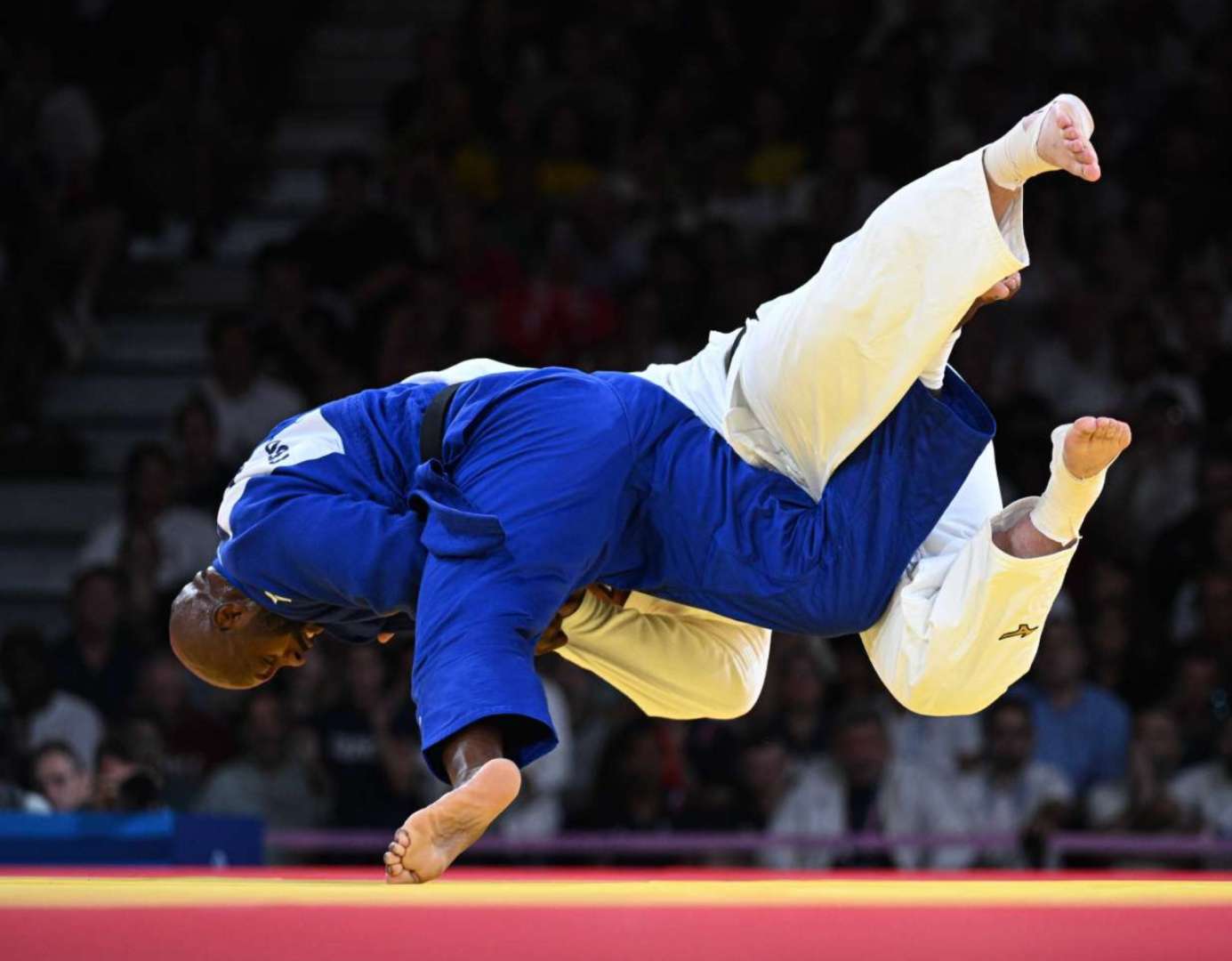
Throughout more than fifty years, I have seen so many incredible male and female judoka. I am an admirer before I am a journalist. For me, there is Fujii of course but also Yamashita, Koga and Inoue among the Japanese; Rougé, Douillet and now Riner for France; Ingrid Berghmans of Belgium and Loretta Cusack-Doyle of Great Britain, to name only a few. They were all impressive judoka. Today, I am so happy to see Neil Adams, whom I admired as well, being one of the voices of JudoTV.com. It is wonderful because he still has so much to teach us.”
Jo has encountered many legends. Among the legends of legends was Anton Geesink of the Netherlands, the first non-Japanese judoka to win Olympic gold, in Tokyo in 1964. “One day, I met Anton Geesink. He came towards me, held out his enormous hand and said, ‘Hello, I’m Anton.’ I was intimidated and replied, ‘Yes, I know.’ He was a very human person, as judo champions generally are.”
Covering so many competitions across a career, indeed a lifetime, has enabled Jo Langer to build an extraordinary address book. It is not, however, merely a long list of contacts. “I have made many friends during these fifty years. Whenever I come to an event, I cannot miss a single minute of judo but above all I am happy to see all these people again, champions or not. In the present generation, for example, Teddy Riner is simply incredible. On the tatami, he is a winning machine. Away from it, true to his name, he is a real teddy bear, so kind.”
For such a passion to develop, several ingredients were needed. The principal one is, naturally, judo itself. “I have always been drawn to the ethical dimension of judo, to its respect. It is not only about fighting and results and that has always fascinated me. In my work, I have always tried to make my readers feel that.”
In fifty years, while never moving away from its fundamental values, judo has evolved considerably. Jo has been one of its attentive witnesses. “Let us be honest; judo was not a television-friendly sport. It was too complex to explain and to understand. I sincerely believe that the developments of recent years, under the presidency of Marius Vizer, have brought a great deal to our sport. Judo today is profoundly different in its form, but not in its substance, because its values have been preserved. That is the most important thing.”
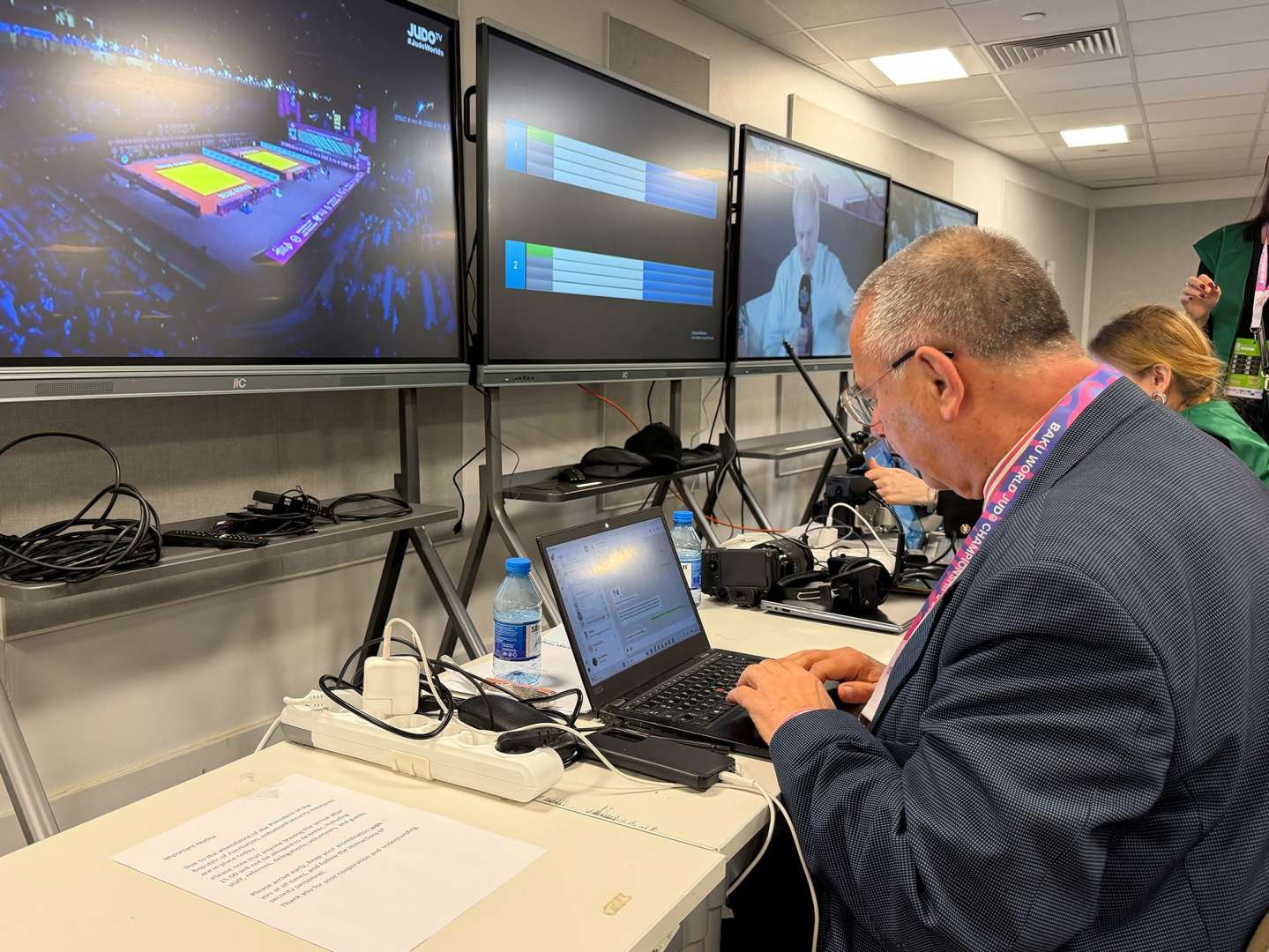
Here in Baku, Jo Langer spends his days in the press room, less than a metre from the screens broadcasting the world championships. He takes notes, records everything and remembers everything. Working for the Judo Vienna Federation and as a member of the Executive Committee of the International Sports Press Association, AIPS, he continues to live his passion.
“All media know that if they need something, I can help them.” Dear Jo, that is exactly what we need from you! Keep sharing your stories. There are still many more to tell.