
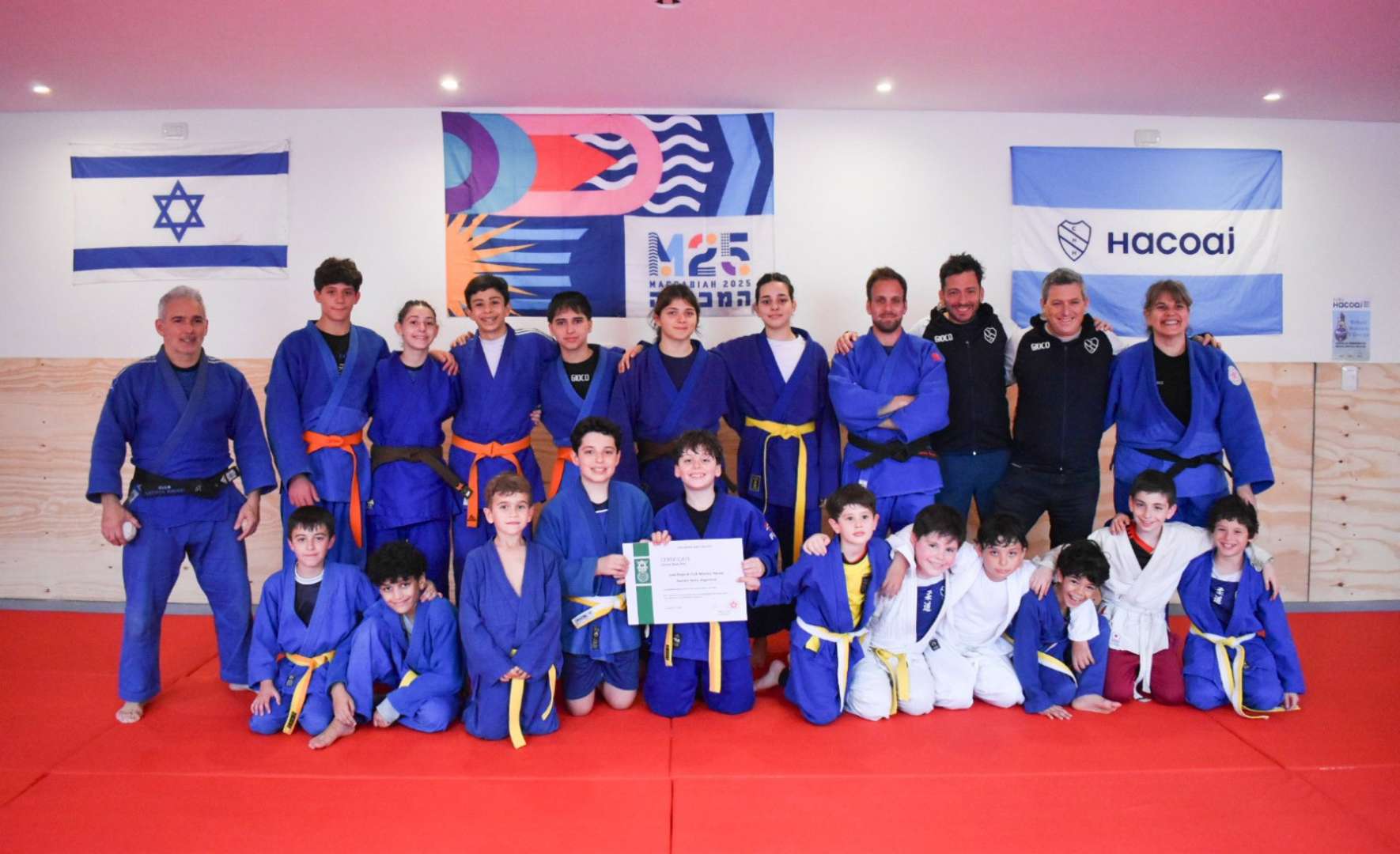
Founded in 1935, Hacoaj is deeply woven into the life of its community. Today the club counts more than 10,000 members and offers over 200 sporting, cultural and educational activities, alongside inclusive programmes and community initiatives. Within that wide-ranging environment, Judo Hacoaj has built a distinguished history of its own. More than 100 children pass through its judo school every year, while a competitive group of around 25 judoka, from ten-year-olds to veterans, represents the club at local, national and international level. Hacoaj athletes have competed at South American and Panamerican championships and, this year, at the Cadet World Championships.
The decision to join the IJF Green Dojo programme grew naturally from an existing institutional commitment. Through its Hacoaj sustainable initiative, the club had already been promoting environmental awareness in sport and community life. The IJF certification offered both international recognition and, more importantly, a practical framework through which the judo section could turn that commitment into clear, shared habits.
“We decided to go a step further,” explained the club. “When we discovered the IJF programme, we began planning concrete actions to engage our judoka, coaches and families in this commitment.”
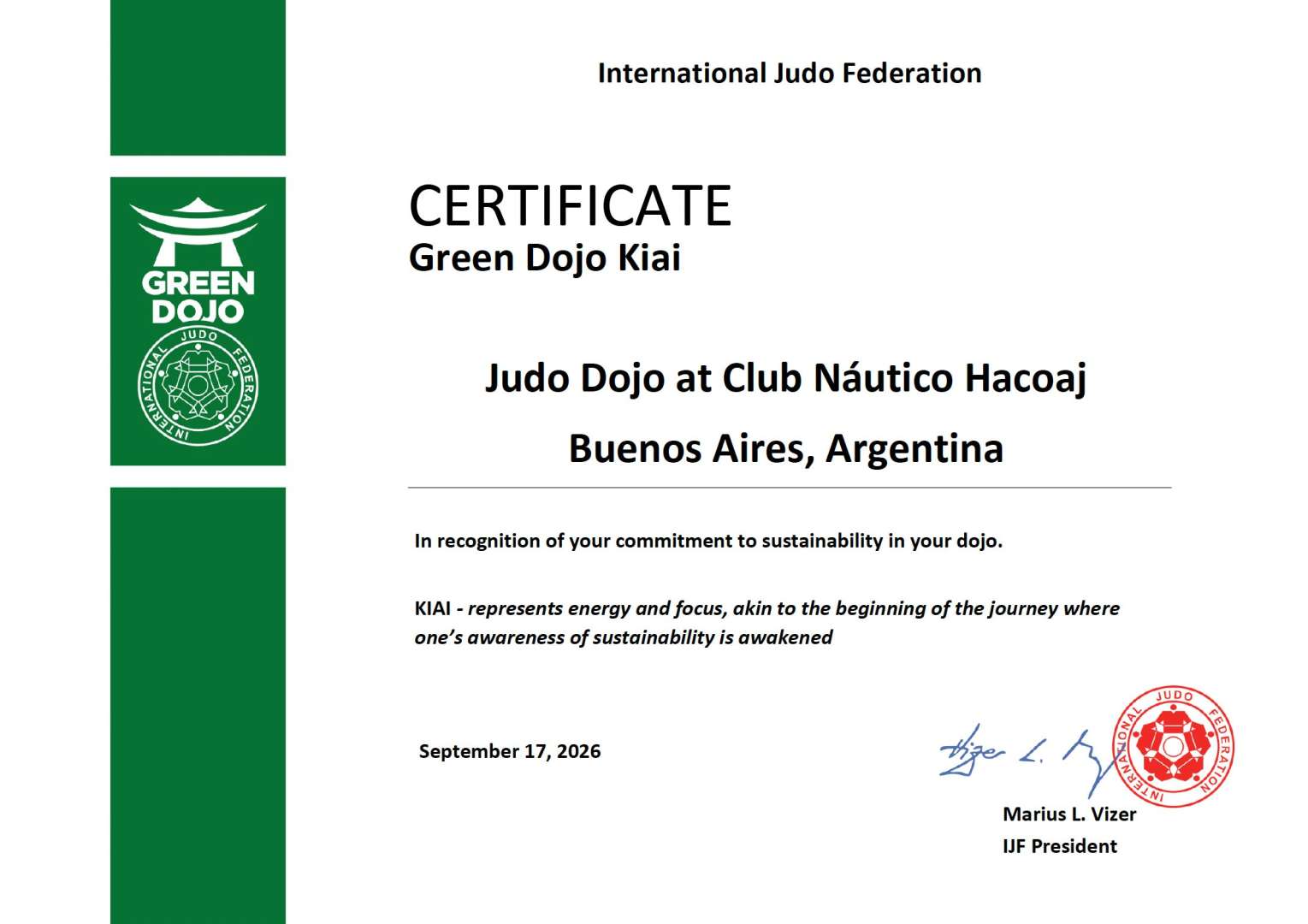
The announcement that Hacoaj would become the first certified Green Dojo anywhere in the Americas came as a surprise. It also brought a strong sense of pride, not as an end in itself but as an invitation to others. “If Hacoaj could do it, other dojos can do it too,” said Ariel Goldman from Hacoaj. “We hope we can be an inspiration for clubs across the region and around the world.”
Its action plan was built around the programme’s three key pillars: energy efficiency, waste reduction and water conservation. The dojo already benefited from low-consumption LED lighting and water-saving systems. The Green Dojo process helped turn those facilities into a more complete daily culture. A protocol now ensures that lights and equipment are switched off when not in use. Natural light is prioritised whenever possible, while air conditioning is used only when genuinely needed and is set no lower than 24°C. In the bathrooms, flow-controlled timed valves support responsible water use, reinforced by clear signage in showers and toilets.
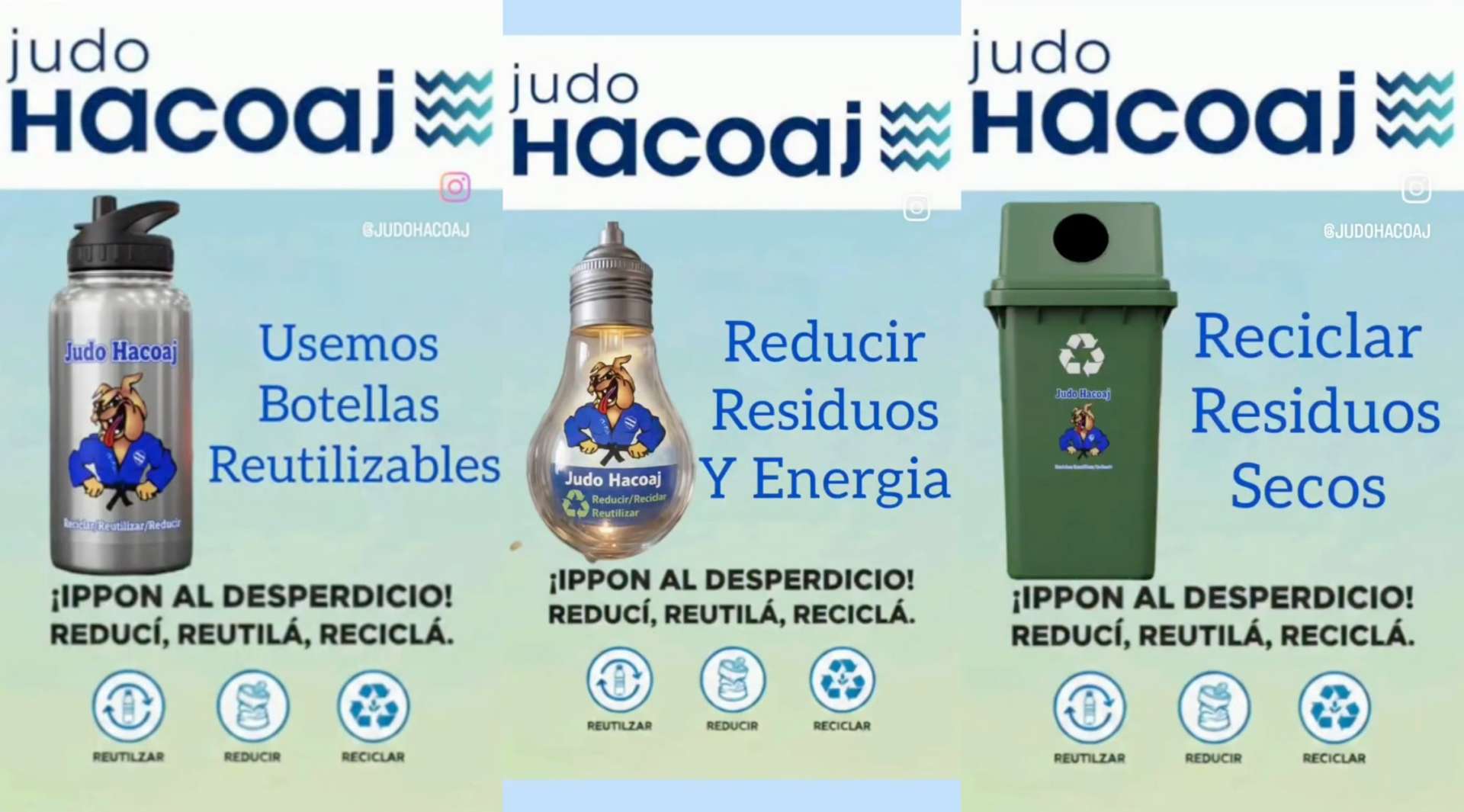
Waste reduction has also become visible in the life of the dojo. Hacoaj introduced a green bin for waste separation and installed a water dispenser, encouraging judoka to refill reusable thermal bottles rather than rely on single-use plastic. Awareness signs explain the importance of sorting waste, while coaches and the competitive team have received specific guidance on environmentally responsible behaviour during competitions.
One practice has already made a particular impression. At the end of tournaments, Hacoaj judoka collect not only their own litter but also any waste left around them. Young athletes adopted the habit quickly and it has since attracted the attention of other clubs, which have asked how the initiative was achieved. The campaign was given a memorable name: Ippon al desperdicio, or “Ippon to waste”. It has been used to communicate the project inside the club and on social media, making the link between judo and sustainability immediate and accessible.
Perhaps the most important step, however, is educational. Green Dojo principles have been incorporated into belt grading examinations. A judoka cannot progress to the next grade without understanding the basics of the programme. In this way, sustainability is not reduced to a poster on a wall; it becomes part of the learning journey of every member.
The initiative has been supported from the outset by coaches, judoka, parents and volunteers. Volunteering is a central feature of Hacoaj’s identity, especially within its judo section, where many parents and judoka contribute directly to the life of the dojo. Their involvement made it possible to turn an institutional ambition into a living project.
For the club, the connection with judo values is self-evident. Respect, responsibility, education and mutual welfare and benefit cannot stop at the edge of the tatami. “There is no collective wellbeing or mutual benefit if we do not take care of the world we live in,” Ariel Goldman underlined. “Judo teaches us that on the mat; the Green Dojo programme invites us to practise it off it.”
Hacoaj is already discussing joint actions with other sections of the club through the Hacoaj sustainable framework. The aim is to ensure that sustainability becomes a traversing policy across all activities, rather than an isolated initiative within judo.
The club is also looking ahead. As participation and volunteering continue to grow, there is an intention to consolidate what has been achieved and ensure that every new member embraces the same principles. The Level 2 Zanshin criteria are already under review, with several measures being implemented in preparation for the next stage.
For other clubs considering the programme, Hacoaj’s message is clear: join it! Major investment or specialist infrastructure is not required. What matters is willingness, organisation and genuine commitment. Small, accessible actions can create meaningful change, while the effect reaches far beyond a certificate.
“This recognition is a source of immense pride for all of us and, at the same time, a great responsibility,” Ariel Goldman concluded. “The certificate is not a finishing line, it is a starting point. We want to be a living example that environmental commitment and sporting excellence go hand in hand, for ourselves and for the generations that follow.”