
The movement has been building throughout the season. At the inaugural Ecole Mont-Olivet Grand Slam in Lausanne, inclusive sporting activities formed part of a landmark event. At the Veteran World Championships Sarajevo 2026, inclusive judo had a visible and meaningful place again. Some of the young people involved in the Azerbaijan Judo Federation’s initiative were even present in Bosnia and Herzegovina only a few days ago, gaining their first international competition experience at the Special Olympics Open Judo Tournament.
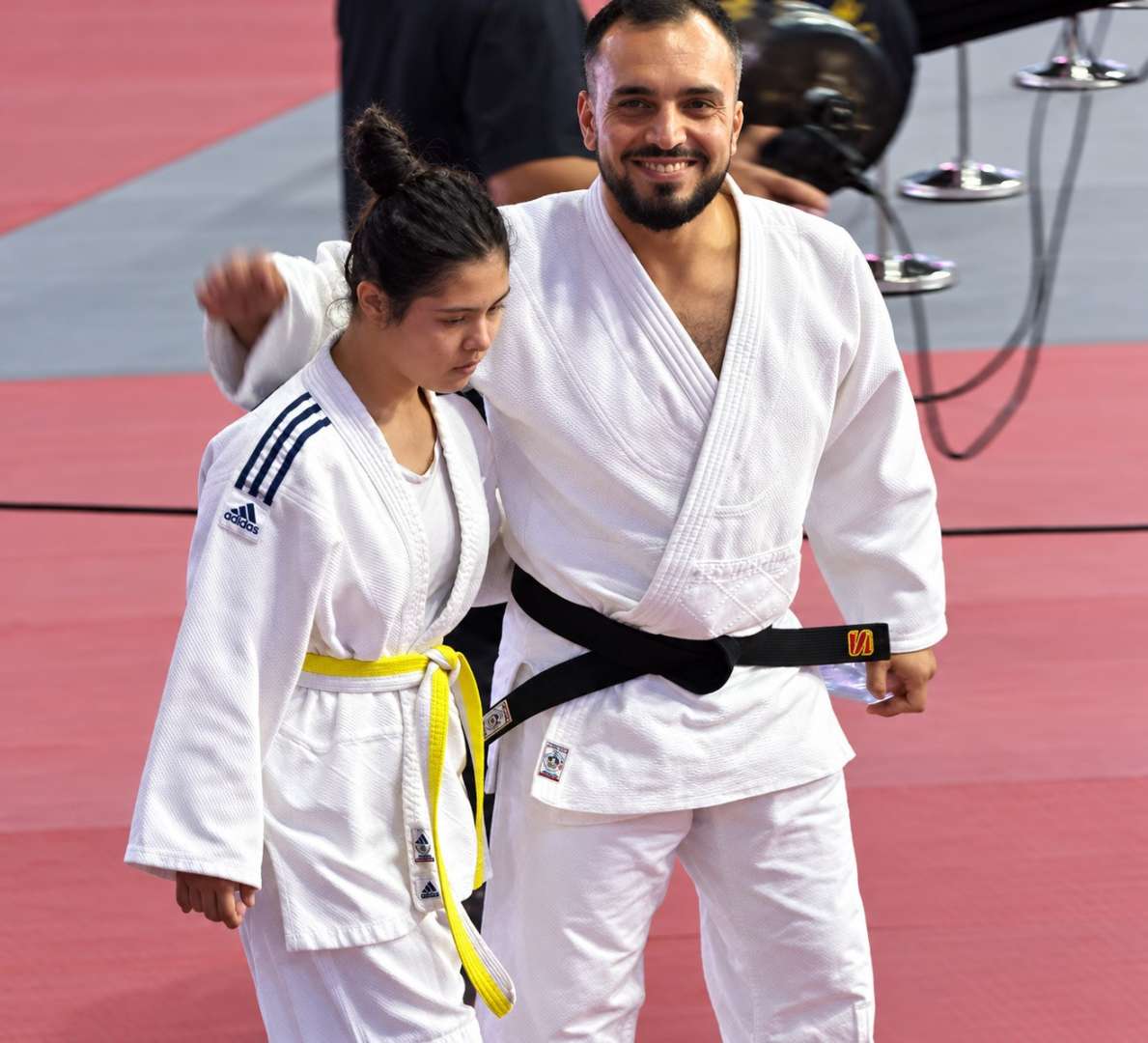
In Baku, the moment was theirs. At the centre of the arena, in front of the world championships audience, a group of young judoka with Down syndrome stepped onto the tatami for a lively adaptive judo training demonstration. In an environment usually reserved for the highest level of international competition, they brought something equally powerful: joy, enthusiasm and a reminder of what judo can mean to every person who practises it.
It was impossible not to notice the smiles. Faces lit up as the young athletes moved, worked with their partners and demonstrated what they had learned. The atmosphere was warm, energetic and deeply moving. For them, this was far more than a demonstration. It was a moment of recognition, participation and pride, shared with a global judo community.
Launched in 2024, the Azerbaijan Judo Federation’s adaptive judo project aims to make judo accessible to everyone, promote inclusion and share the values of the sport with a wider audience. Each athlete’s individual abilities are taken into account, creating an environment in which they can learn, grow and fulfil their potential.
The impact extends well beyond the tatami. Parents have spoken of positive changes in daily life, in social skills and in communication. Judo offers physical activity and technical learning but it also creates bonds, confidence and new opportunities to belong.
Two adaptive judo tournaments have already been organised in Azerbaijan, demonstrating that this is not a one-off initiative but an activity with a future. The experience in Sarajevo marked another important step, while the presentation in Baku offered the athletes a stage unlike any other.
As the speaker invited the audience to welcome the athletes and coaches with warm applause, the message was simple and unmistakable: judo is for everyone.
Inclusion is not a separate story running alongside judo; it is part of judo itself. From the youngest beginners to world champions, from local dojo activity to the biggest international stages, the same values apply: mutual respect, courage, friendship and the opportunity for every individual to progress.