
“I’m Neil Adams, 1981 world champion, two-time Olympic silver medallist, five-time European champion.” The achievements are remarkable but in this video, Adams goes beyond results to share the emotions, lessons and defining moments of his journey.
His story began early. At seven or eight years old, his father took him to a local judo club in Rugby, England. Within a year, he moved to Coventry, the club that became the cornerstone of his junior career. From the very beginning, his father was meticulous, focusing on fundamentals and, above all, on attacking judo and throwing for ippon. Those principles would stay with Adams throughout his career.
As he progressed to the senior level, Neil Adams entered an era of intense rivalries. One name stands out clearly: Ezio Gamba of Italy. “My first senior European title against him was a great step forward,” Adams recalls. Another major rival was Vladimir Nevzorov of the USSR. Still young, full of enthusiasm and confidence, Adams believed in his ability deeply. “Inside me, I knew it was possible,” he says, a mindset that drove him forward on the biggest stages.
The Olympic Games became a defining thread in his career. At the Moscow 1980 Olympic Games, Adams reached the final, facing Gamba once again. “I was a step behind on attacks and he got the decision at the end,” he explains. It was the only contest he lost that year. “I was very disappointed. I felt like I had lost the gold medal rather than won the silver.” That frustration pushed him straight back into competition, fuelled by an unfulfilled ambition.
In 1981, Adams reached the pinnacle of world judo. At the world championships, he faced Japan’s Jiro Kase in the final and made history as the first British male judoka to win a world title (first ever British world champion was Jane Bridge in 1980 in New York, USA). Victory came through a decisive juji-gatame in front of an unforgettable crowd. “I remember the flag going up and the national anthem being played but I couldn’t hear it,” he recalls. “All I could hear was the crowd singing.” It remains one of the greatest moments of his life. “It’s not just winning it, it’s winning it well.” Yet, one goal remained firmly in his mind: Olympic gold.
The Los Angeles Olympic Games in 1984 brought another final, this time against Germany’s Frank Wieneke. Once again, Adams finished with silver. “That was a disaster,” he says candidly. On the podium, there was no smile, only the same disappointment he had felt four years earlier. “It was definitely the mental stress,” he reflects. “It’s something that stays with you forever.”
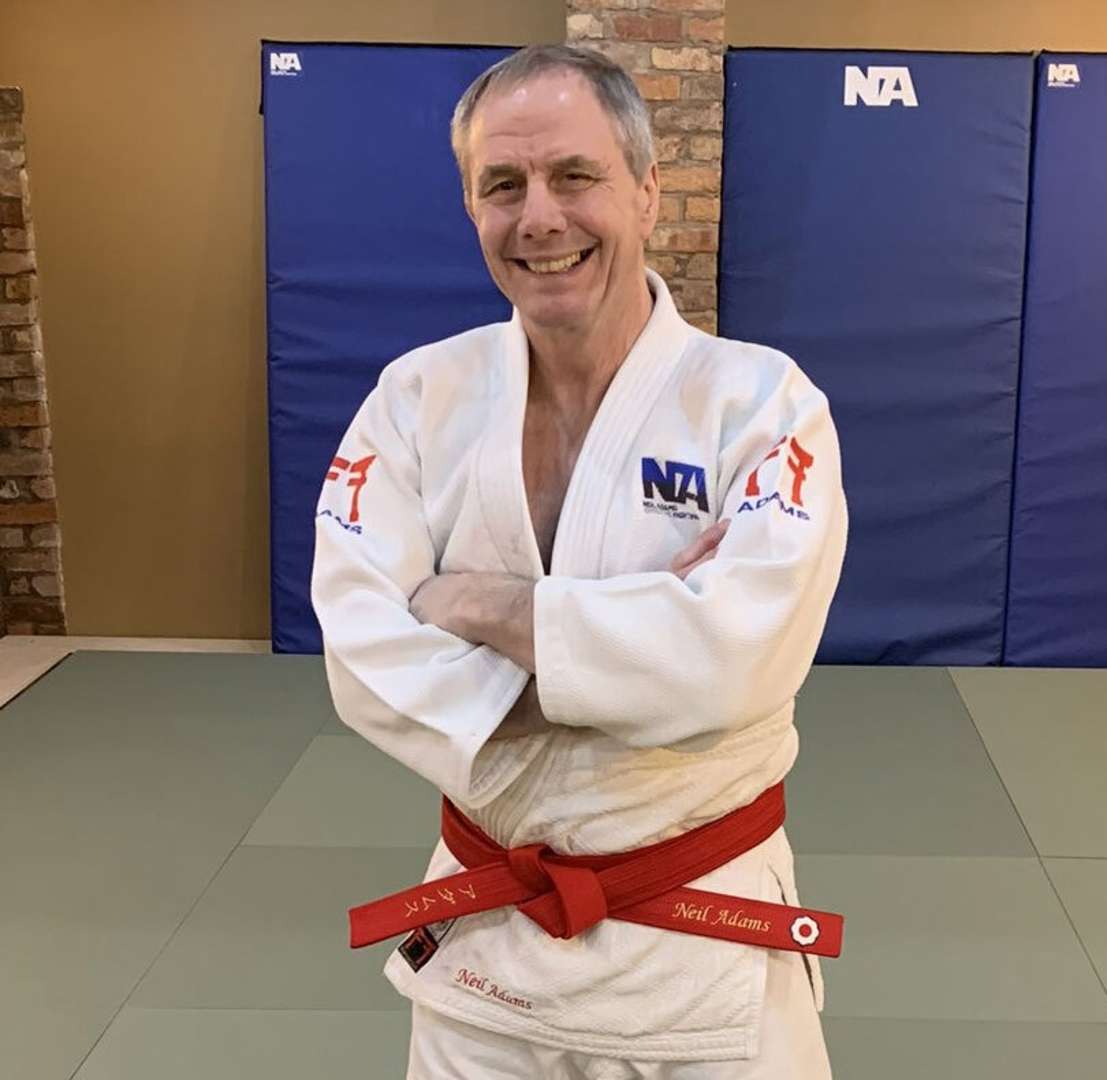
After adding further medals on the international circuit, Adams gradually shifted his focus. He moved towards coaching and education, spending time in France and contributing significantly to the development and teaching of judo. At the same time, a new chapter was emerging. Through instructional films, technical narration and fight analysis, his voice became increasingly familiar. His first major commentary role came at the 1989 world championships.
Today, Neil Adams is recognised worldwide as the voice of judo, a leading commentator on JudoTV.com. “It’s great to have my voice as part of my legacy and to promote judo in the most professional way possible,” he says. “That’s a big plus for our sport.”
Being inducted into the IJF Hall of Fame stands as a special recognition of his contribution. For Adams, greatness comes with responsibility. He believes that champions have a duty to guide and inspire those who follow, helping future generations find the right path through judo.
This JudoTV.com video is more than a look back; it is a portrait of ambition, resilience and lifelong dedication, told by a man whose influence continues to resonate on and off the tatami.