

The World Judo Tour: Twelve Months Around the Globe
As tradition dictates, the World Judo Tour began in Paris. Over the course of twelve intense months, the global circuit unfolded at a relentless pace, featuring nine grand slams and five grand prix events. Two of those grand prix marked historic firsts: Lima, Peru and Guadalajara joined the calendar, while Qingdao returned as a familiar and welcome stop. Across the season, a total of 4,736 judoka took part in WJT competitions, many of them competing in several events, highlighting both the depth and consistency of elite judo worldwide.

Building the Future: Cadets, Juniors and Continental Events
Alongside the WJT, the International Judo Federation, in close co-operation with the continental unions and national federations, organised and supervised numerous continental opens, as well as the cadet and junior circuits. These two age groups saw their world championships held in Bulgaria (cadets) and Peru (juniors), underlining the importance placed on the development of the next generation.

Records and Inclusion: Veterans and Kata Championships
The event calendar was equally impressive beyond the elite circuit. The World Veterans Championships Paris 2025, welcomed a record-breaking 2,316 competitors from 64 nations, while the world kata championships, also held in the French capital, set another record with 466 athletes representing 37 countries. These figures reflect the inclusivity of judo and its ability to bring practitioners of all ages and disciplines together.

Budapest 2025: A World Championship to Remember
The highlight of the competitive season came in Budapest, Hungary, home city of the IJF headquarters, where the 2025 World Championships took place. A total of 556 judoka from 93 nations competed in the individual events, followed by the mixed team competition, which brought 172 athletes from 16 countries together. History was made as Georgia claimed its first-ever world title in the mixed team event, ahead of Korea, with Japan and Germany sharing the bronze medals.

Transition and Evolution Between Olympic Cycles
The year 2025 marked a transition between two Olympic cycles, yet the competitive level remained exceptionally high. It was also a year of evolution, with refereeing rules reviewed and tested successfully throughout the season. These adjustments now pave the way for a new and exciting cycle heading towards the Los Angeles Olympic Games, with clarity, fairness and dynamism at the heart of the sport.

Education and Development at the Core
Beyond competition, education and development remained central to the IJF’s mission. Throughout the year, both established programmes and new initiatives grew. Judo for Children, Judo in Schools, Judo for Peace and Judo for All reached thousands of practitioners worldwide. Projects dedicated to children and the youth developed in countries such as Uzbekistan, Namibia, Sierra Leone, São Tomé and Príncipe, Colombia, Bhutan and Egypt, among many others. Today, millions of children and teenagers practise judo thanks to the tireless work of federations and clubs around the world.
Equality, Inclusion and Environmental Responsibility
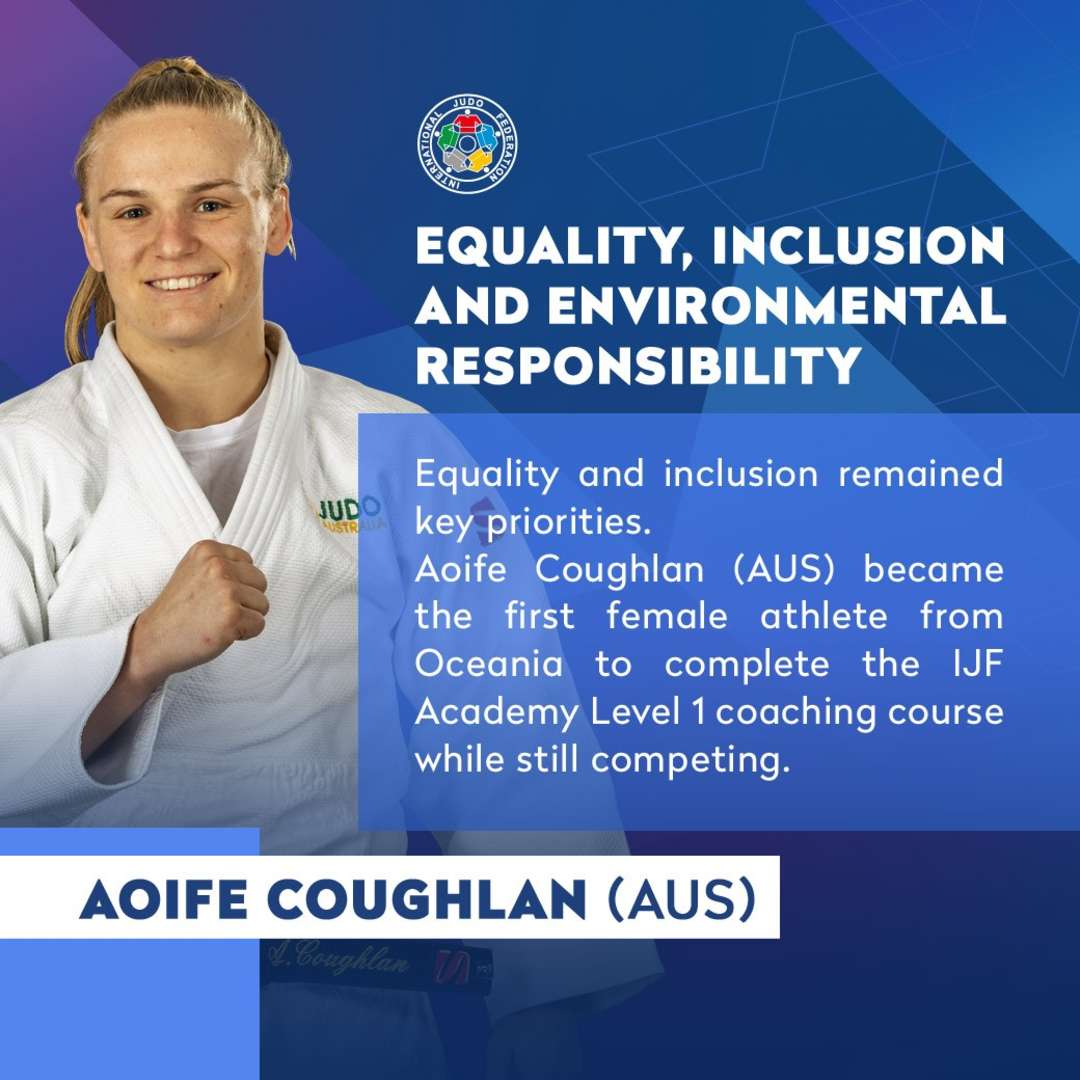
In all its activities, whether sporting or educational, the IJF continued to promote equality, inclusion and respect for human rights, with a strong emphasis on gender equality and equity, as well as environmental responsibility. For instance, in 2025, Aoife Coughlan (AUS) became the first female athlete from Oceania to complete the full IJF Academy Level 1 coaching course while still competing at the highest level. On 8th March, the global judo community came together to celebrate International Women’s Day, reaffirming its commitment to equality.

Green Dojo and Climate Action
Environmental responsibility also took a significant step forward with the launch of the Green Dojo initiative. Clubs from Greece, Australia, Belgium and Korea were among the first to join the label created by the IJF, demonstrating that small, collective actions can shape a better future for future generations. In Brazil, a major awareness initiative was organised in partnership with the IJF: a COP30-related Mutirão Judo activity in Rio de Janeiro combined judo practice, environmental education and a collective beach clean-up under the leadership of IJF Climate Ambassador Flavio Canto.
Peace as a Universal Message
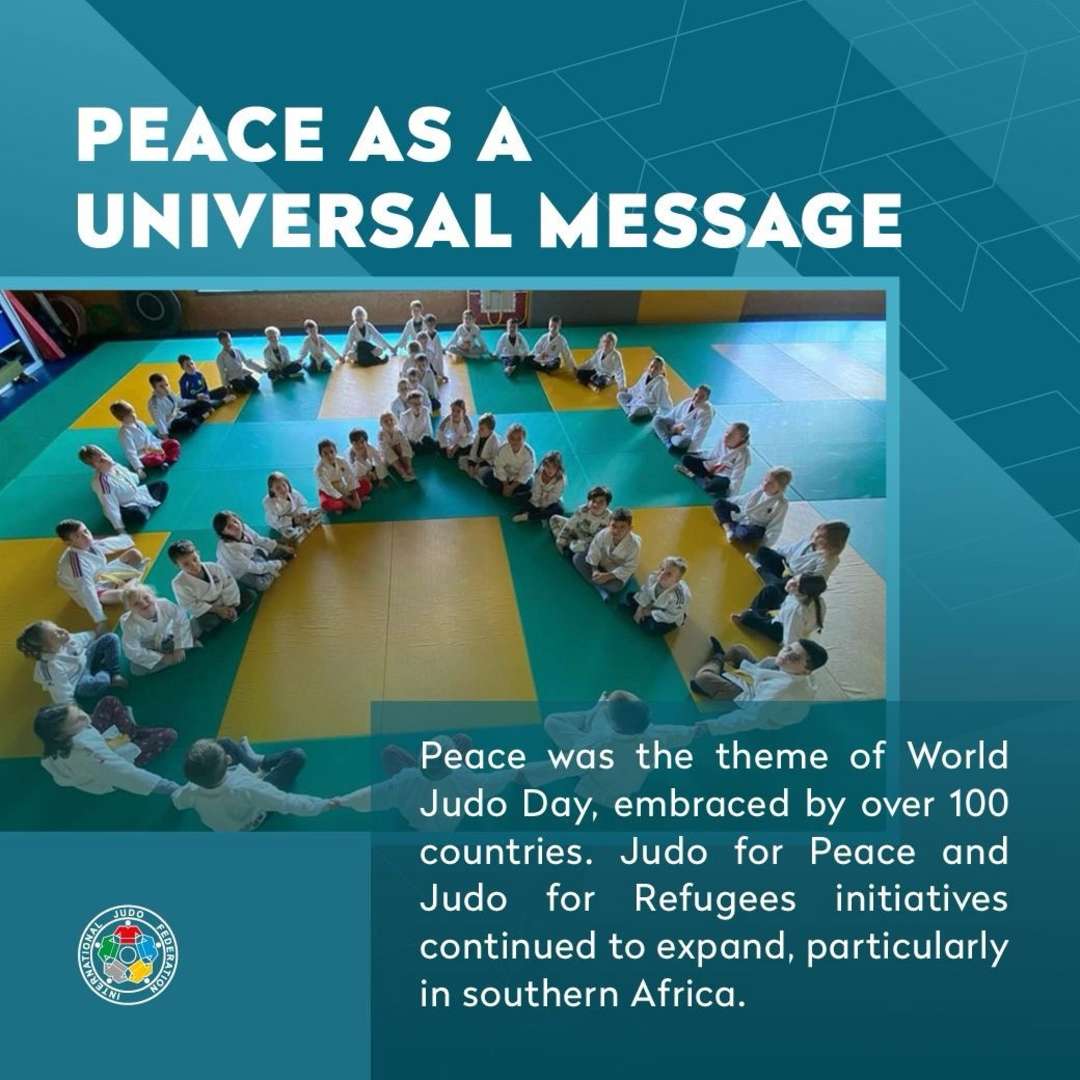
Peace was the theme of World Judo Day, embraced by more than one hundred countries and thousands of judoka worldwide. In a world marked by instability, this message resonated strongly. Judo for Peace and Judo for Refugees initiatives continued to expand, particularly in southern Africa (Zambia, Malawi and Zimbabwe), while Judo for Peace South Africa pursued both qualitative and quantitative growth.

The IJF Academy: Educating the Leaders of Tomorrow
The IJF Academy, the educational arm of the federation, also experienced a landmark year. For the first time, a women’s edition of its prestigious coaching course was hosted, held in October at the Olympic Centre ‘Matteo Pellicone’ in Ostia, Italy. Later in the year, the 135th IJF Academy course, in Tokyo, was honoured by the presence of Her Imperial Highness Princess Tomohito of Mikasa at the Kodokan, the birthplace of judo, a truly historic moment.
This overview of 2025 couldn’t be exhaustive; the year was simply too rich in events, initiatives and achievements. Yet it clearly reflects the good health of judo worldwide. Thanks to the collective efforts of continental unions, national federations, clubs and millions of judoka, judo continues to grow, inspire and resonate far beyond the tatami, entering the future with confidence and purpose.