
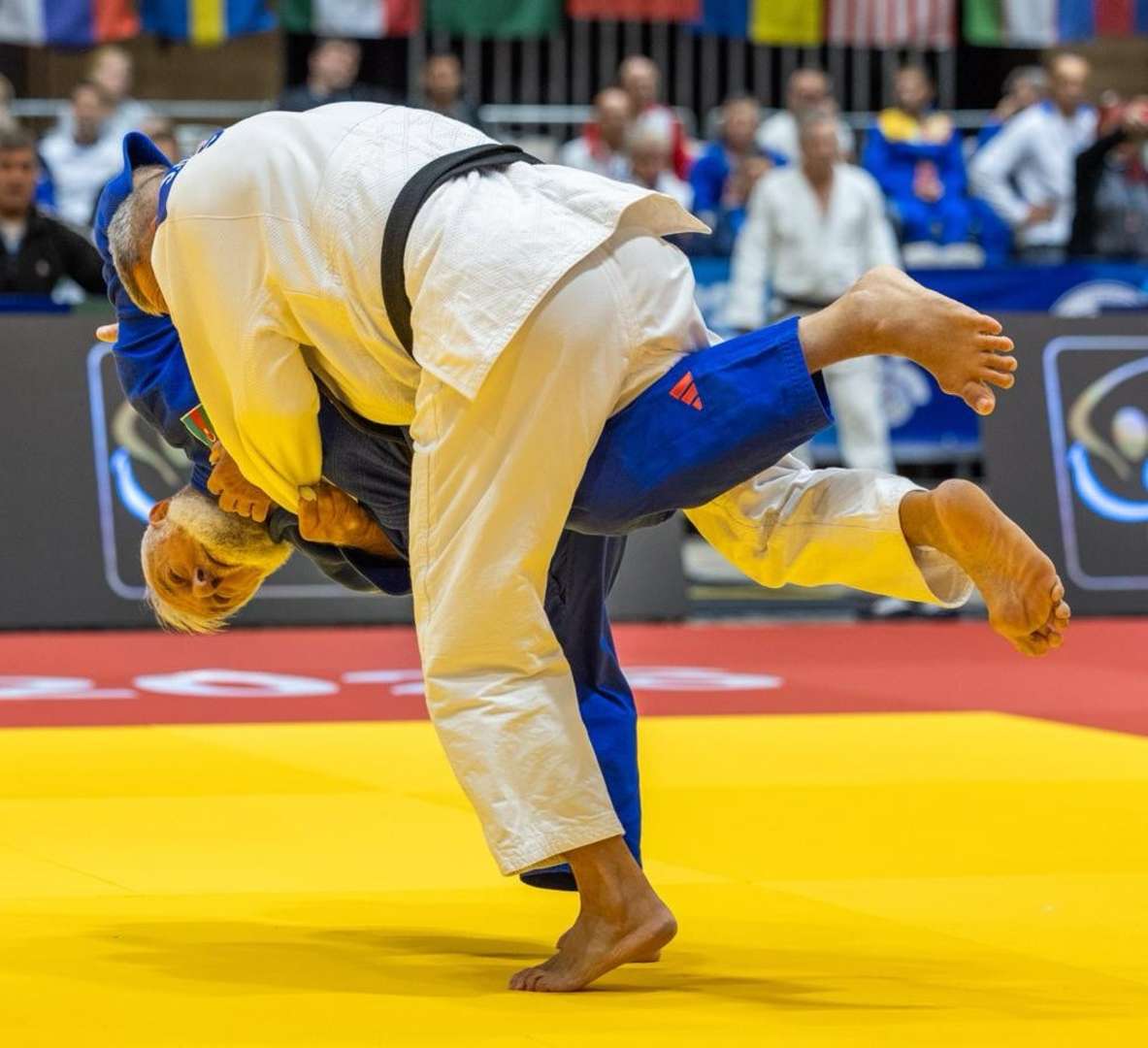
The overwhelming majority of these judoka have spent decades on and around the tatami. Legitimately, they could all claim a well-earned sporting retirement, yet, they are here and they are here in significant numbers, ready to tie their belts once again, bow to an opponent and compete on the world stage.
Much has already been said about what motivates a judoka to continue competing, to test themselves against others and against their own expectations. Those reasons remain as true today as they were for the already completed categories. Yet, the M7, M8 and M9 divisions also offer an opportunity to observe judo itself in one of its most refined forms.
There is a consummate art to movement on display, an illustration of Seiryoku-Zenyo (精力善用), one of judo’s founding principles. Often expressed as maximum efficiency with minimum effort, it is more precisely the best possible use of physical and mental energy. When the years have added their weight and grey hair has become more familiar than it once was, effort is still there. It is measured, adapted to each individual’s capacities and used with purpose.
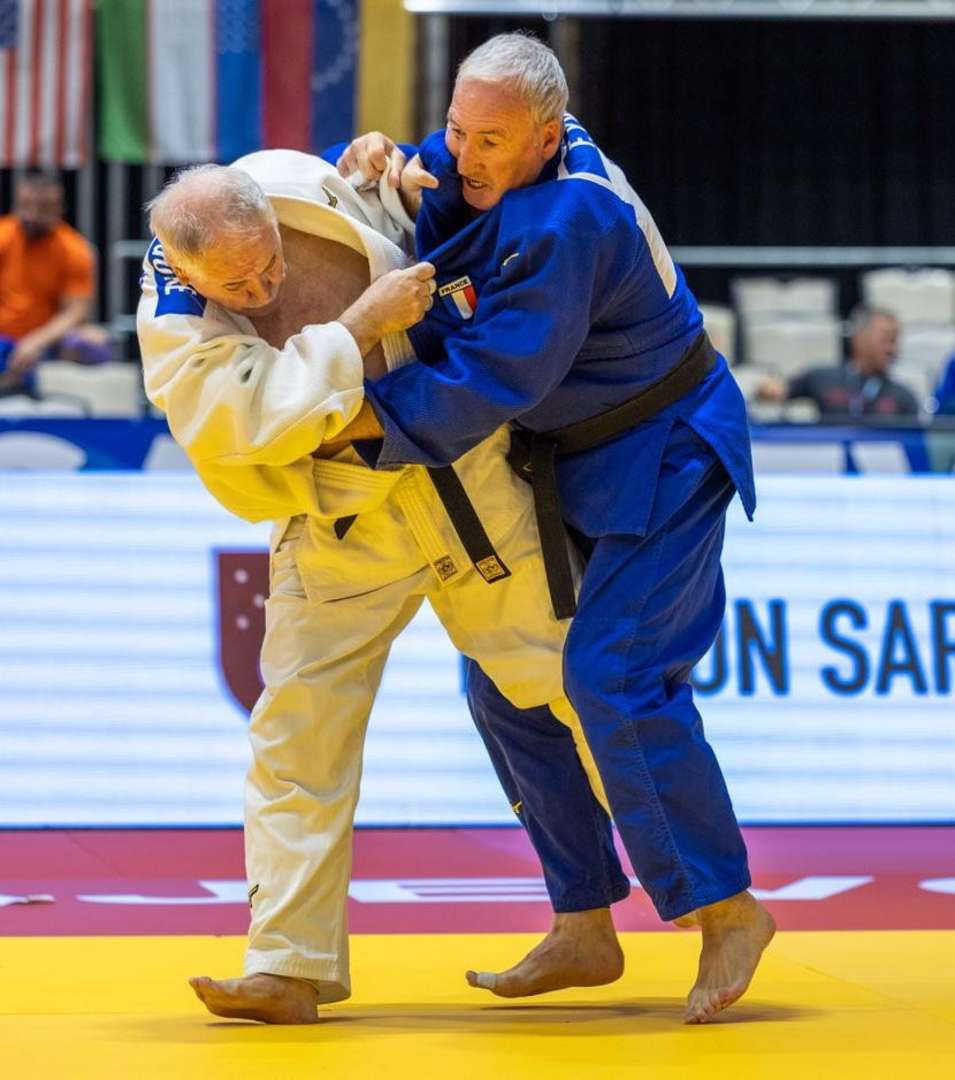
In Sarajevo, the economy of movement seems deeply ingrained. Techniques are not judged by speed or brute strength but by timing, the precision of the hands, the quality of positioning and the ability to read an opponent’s movement before it develops fully. Undoubtedly, the same will be true on the final day of the championships when the women’s categories take their turn under the arena lights.
Such mastery is not acquired in a short time. It is the result of a life devoted to judo, through an education that never truly ends. The judoka in Sarajevo have not come only to apply what they already know. They are also here to continue learning: to correct an error, to discover a different grip, to adjust an approach and then to discuss it with others. Every contest and every conversation that follows it can reveal something new.
What is striking, as the men’s programme reaches its conclusion before the women enter the competition tomorrow, is that the intensity on display has nothing to do with nostalgia. The competitive fire is genuine. The desire to perform well remains fully alive. It simply expresses itself differently, perhaps with greater clarity, a sharper tactical understanding and, certainly, a deeper knowledge of one’s own capabilities.
Another dimension becomes evident while watching the competition unfold: the sensitivity expressed in each contest. Judo remains a sport of opposition. A winner must emerge, yet there is profound respect for the person on the other side of the tatami. Regularly an ippon is followed by the winner checking on their opponent, asking whether everything is all right. Very quickly, the exchange can become a discussion of what worked, what did not, the positioning error that changed the course of the contest, followed by broad smiles.
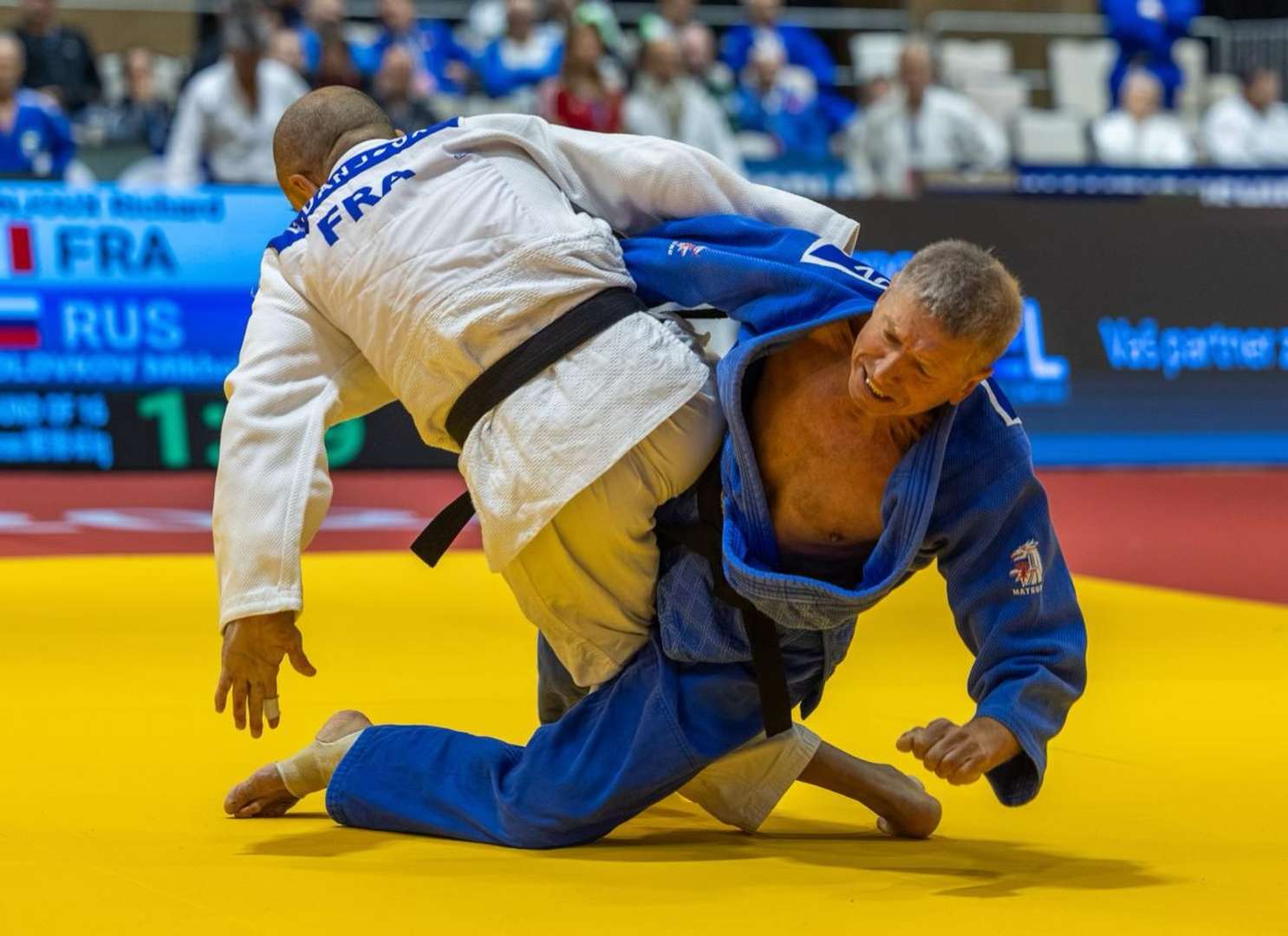
Many of these athletes know one another well. This is not the first time they have met on a tatami. A name, a country code, a club badge or simply a familiar face can bring back memories of earlier events and encounters. In this way, the veteran championships preserve a living memory of global judo, one that is both deeply personal and moving to witness.
It is also fascinating to consider that these judoka have lived through decades of judo history. They have experienced changes in refereeing rules and technical approaches. Some competed when kani-basami was still permitted, while others spent years developing attacks to the legs. Today, they stand adapted to modern judo; like judo itself, they have evolved. Judo is, after all, the way of suppleness, that is the capacity to adapt, to remain flexible and to find a new way forward, all of which lies at the very heart of the discipline.
From the opening day in Sarajevo to the final contests still to come, every category reminds us of one essential truth: judo is not confined to a phase of life or to a collection of results. It can accompany us throughout a lifetime.