
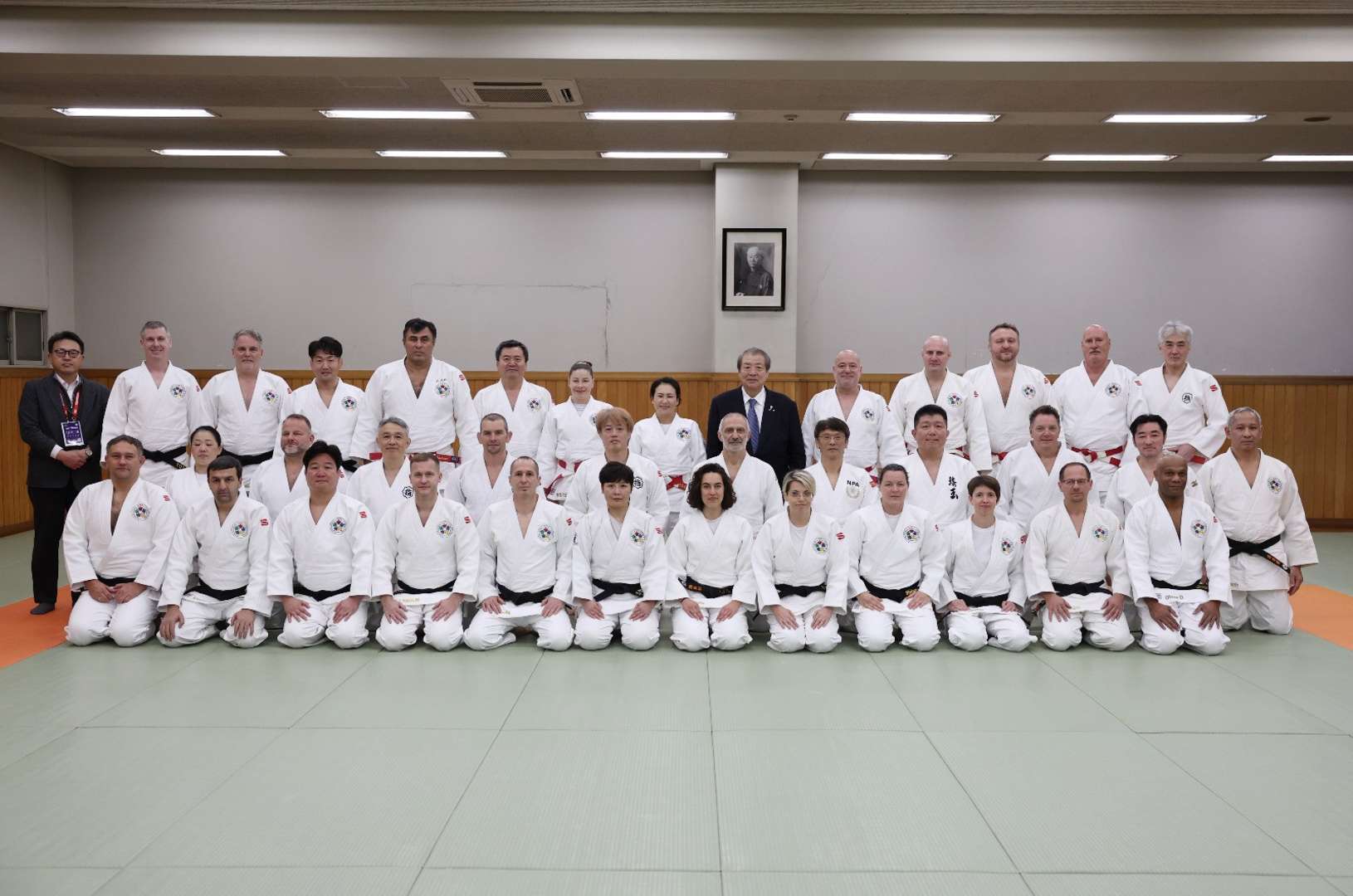
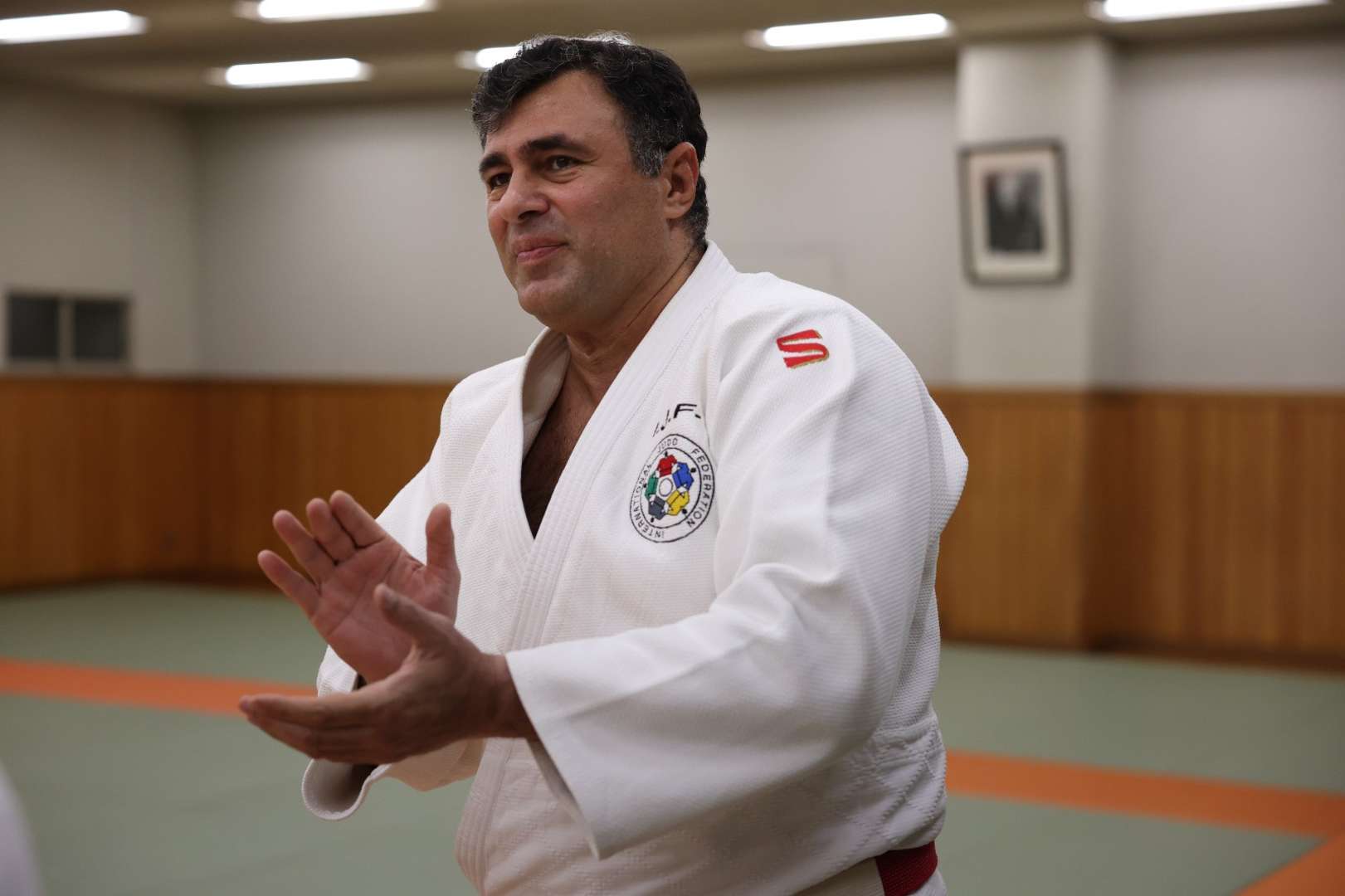
For the Park24 Group Tokyo Grand Slam, IJF Head Referee Director Armen Bagdasarov opened the meeting, “Welcome to the Tokyo Grand Slam, one of the most prestigious events in the world. We have a very important guest at our referee meeting today, Kodokan President Mr Haruki Uemura. He would like to say a few words.”
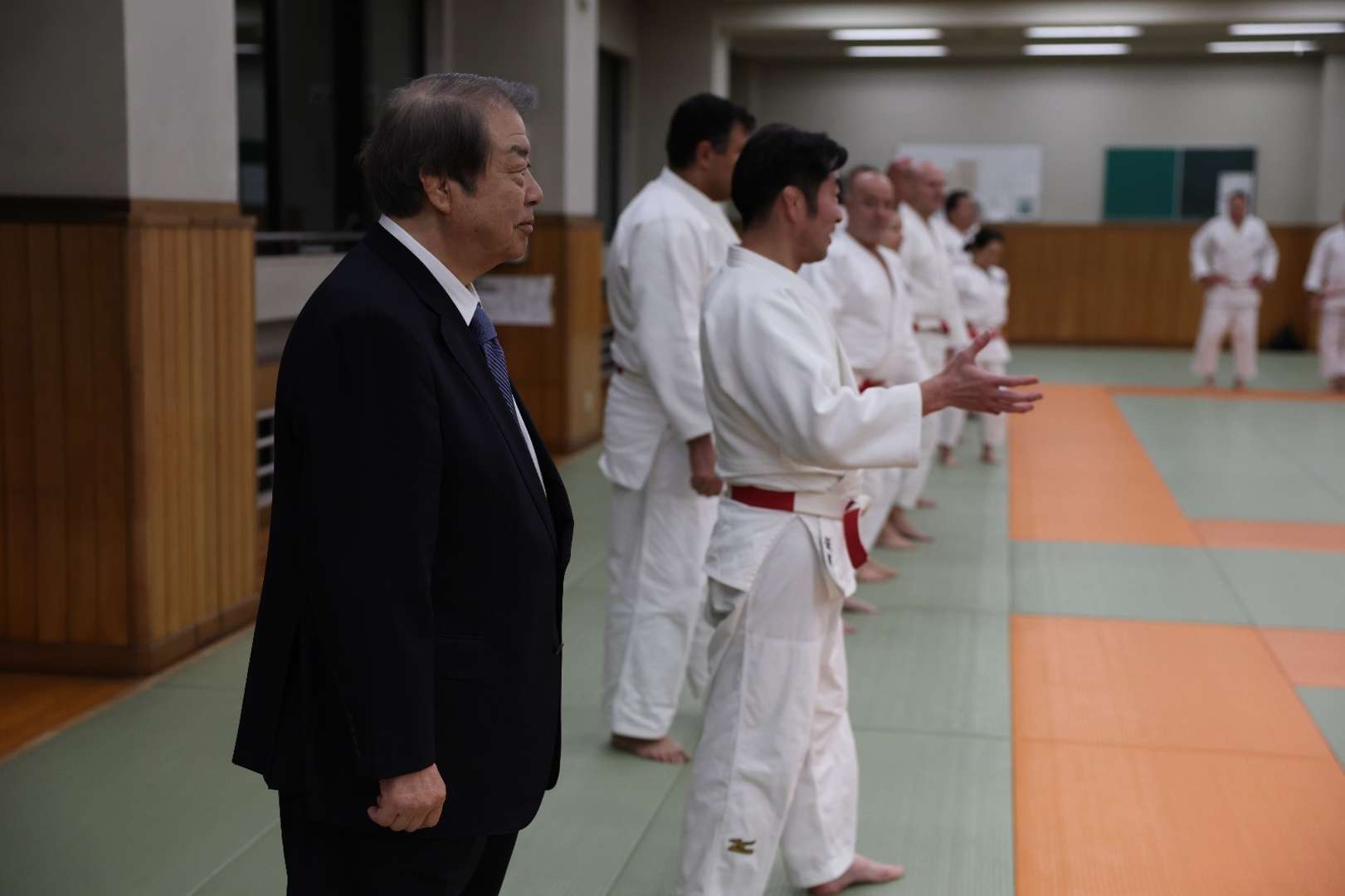
“Welcome to you all. The role you have comes with a big responsibility and so this occasion is an opportunity for you to do your best, to be at your best,” said Mr Uemura.
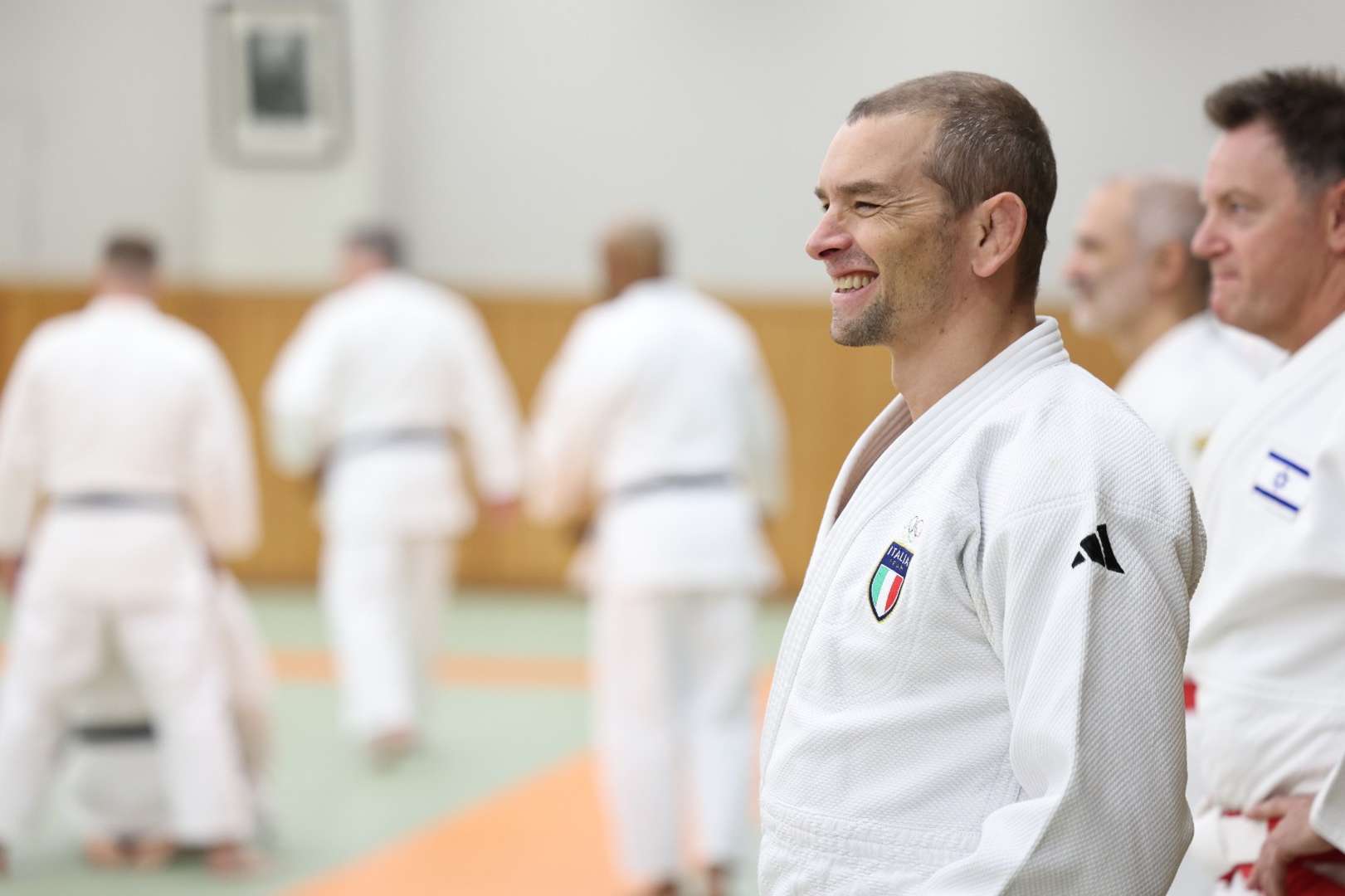
Mr Bagdasarov then welcomed Head Referee Director for Asia Mr Akinobu Osako and IBSA Referee Director and Kodokan Shidoin Mr Kenichi Shoshida, as well as guest coaches, Raffaele Toniolo (ITA), Francisco Bruyere (ITA) and Shany Hershko (ISR), continuing the practice of including World Judo Tour coaches in discussions, to ensure transparency and a collective understanding of nuanced refereeing situations. With such a wealth of experience and knowledge in the dojo, a high level exchange took place, clarifying many details which have a clear impact in elite completion judo.
The first technical focus of the meeting was the exploration of the border between tachi-waza and ne-waza, a border that everyone can agree regularly seems to have blurred edges. The more it is discussed, with concrete examples from the World Judo Tour, the clearer the definitions become and the more everyone can understand the full application of the rules. There was then some development of previous conversations about scoring, a look at potential kansetsu-waza actions in tach-waza and a look at how the belt is being used in tachi-waza.
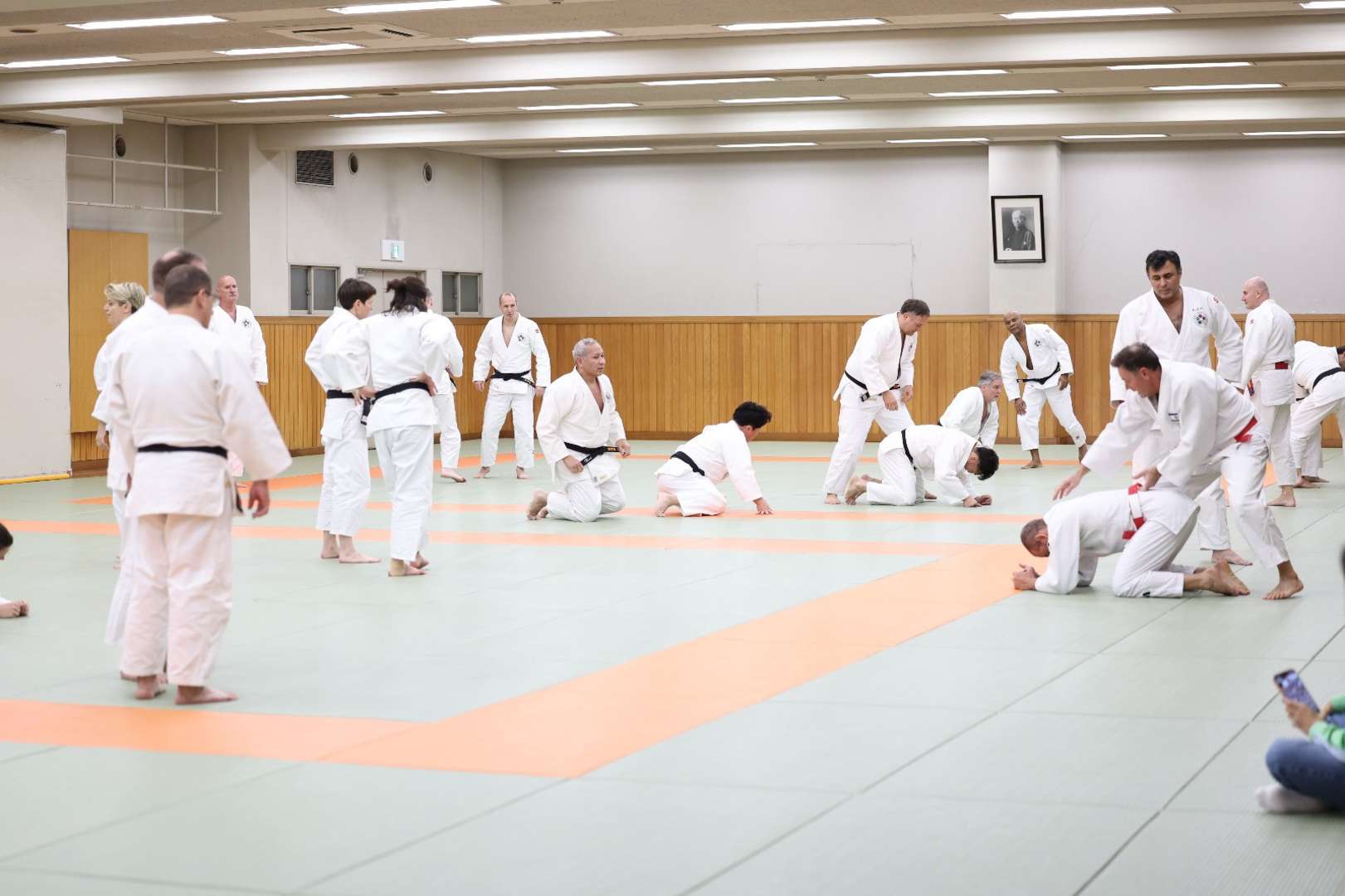
The result of such discussions is the unification of understanding for all client groups: judoka, coaches, referees and media personnel. Judo is a dynamic sport with an element of evolution even when the core sporting objectives don’t change and therefore the discussions must be accepted as endless. No matter the lack of final destination, each discussion is of value and improves the judo experience for everyone involved.