

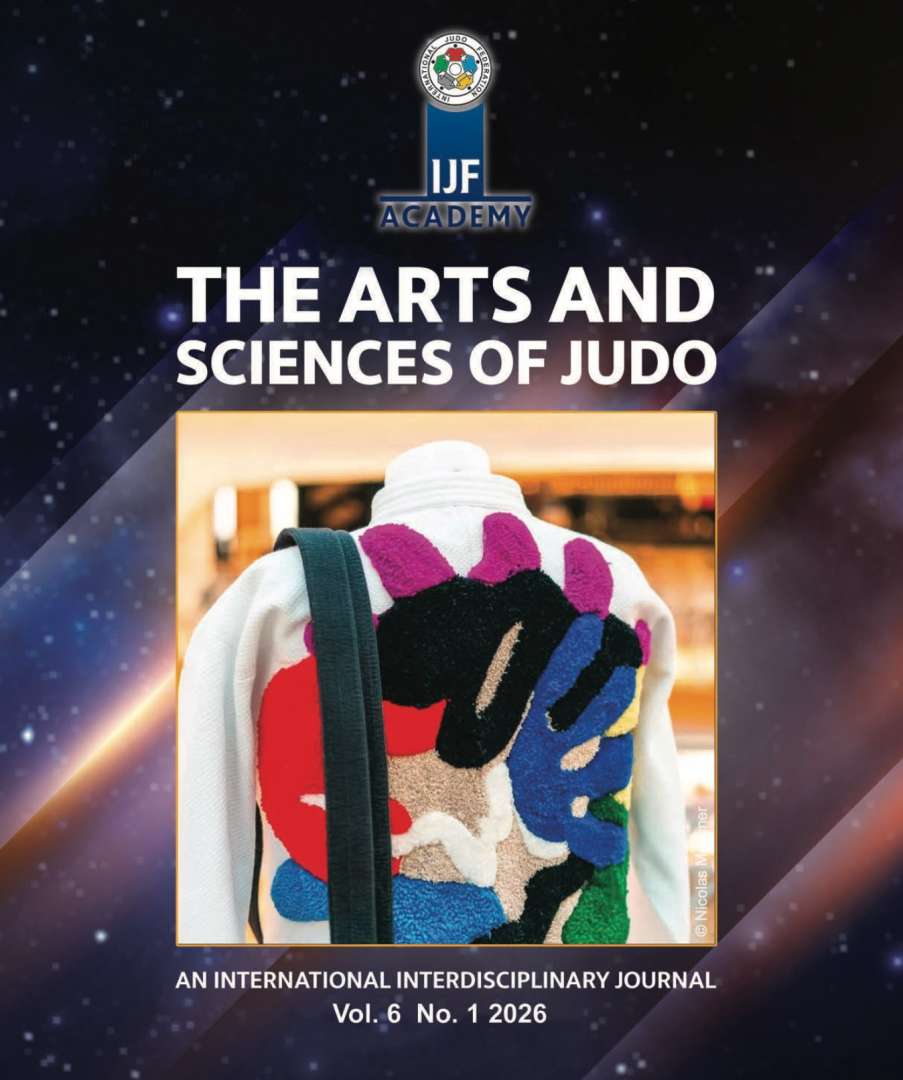
Download the Art and Sciences of Judo - Volume 6 - No1 - 2026
Since its creation, "The Arts and Sciences of Judo" has reflected Jigoro Kano Shihan's conviction that judo is far more than a system of techniques or a competitive sport; Kano envisioned judo as a complete educational method capable of contributing to physical, intellectual and moral development while serving society as a whole. It is this philosophy that continues to guide the journal today, bringing together researchers from a broad range of disciplines in a unique forum where knowledge can be shared across fields that rarely intersect elsewhere.
The journal welcomes contributions spanning sports science, kinesiology, medicine, psychology, education, history, philosophy, biomechanics, communication sciences, technology, economics and management. Every submission undergoes a rigorous peer-review process conducted by an international panel of experts, ensuring the necessary scientific standards, while the journal's open-access model makes its content freely available to the entire judo community.
This latest edition once again illustrates the extraordinary diversity of contemporary judo research. The opening paper explores one of the most fundamental questions surrounding the educational mission of judo: can the principles established by Jigoro Kano contribute to the prevention of violent conflict? Drawing on philosophy, psychology, neuroscience and peace studies, the study examines how judo can foster emotional regulation, resilience and mutual understanding while recognising that these outcomes depend on the quality of pedagogy and the preservation of judo's ethical foundations.
Performance and athlete development also feature prominently, with articles examining the organisation of kata competitions in the Netherlands and South Africa, awareness of shime-waza among junior judoka, oxidative stress biomarkers, engineering approaches to technical and tactical decision-making, post-Olympic performance trends and the history of kosen judo.
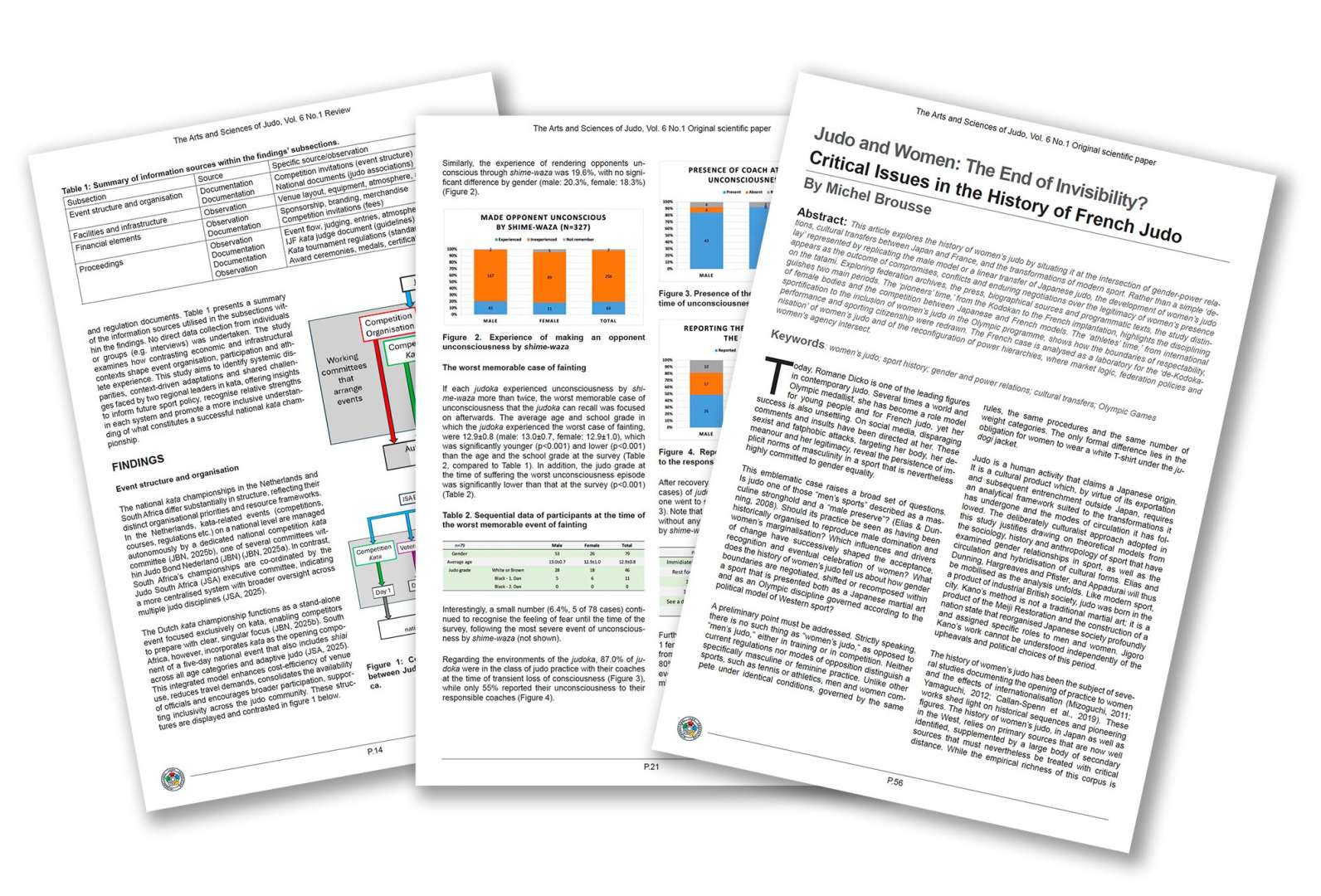
Education remains another central theme throughout the volume. Two papers investigate judo's contribution to early childhood development through innovative pedagogical and neuroscience-based approaches, while another explores its potential as an educational tool for children with ADHD. The historical and social dimensions of judo are equally represented, notably through a study on women in the history of French judo, while the issue concludes with a commentary on adapting safe falling programmes for Arab populations.
More than a scientific publication, The Arts and Sciences of Judo builds bridges between researchers and practitioners. Coaches, teachers, medical professionals, historians and academics can all find evidence, ideas and perspectives that contribute to the continuous development of judo. Each edition strengthens a growing body of knowledge that supports our sport and reinforces the relevance of Jigoro Kano's educational vision in the twenty-first century.
Through the continued work of Dr Sanda Čorak, the editorial team and an international network of reviewers and contributors, The Arts and Sciences of Judo has established itself as an essential reference for anyone seeking to understand judo beyond competition alone, while further reinforcing the IJF Academy's commitment to education, research and the advancement of knowledge.
As this sixth volume demonstrates, research has become one of the strongest pillars supporting the future of judo. Every article enriches our collective understanding, ensuring that Jigoro Kano's vision continues to inspire future generations not only through practice, but also through reflection, discovery and scientific excellence.